01 / Project Overview

Espoirer is a logistics company focused on improving last-mile delivery through automation and digitalization.

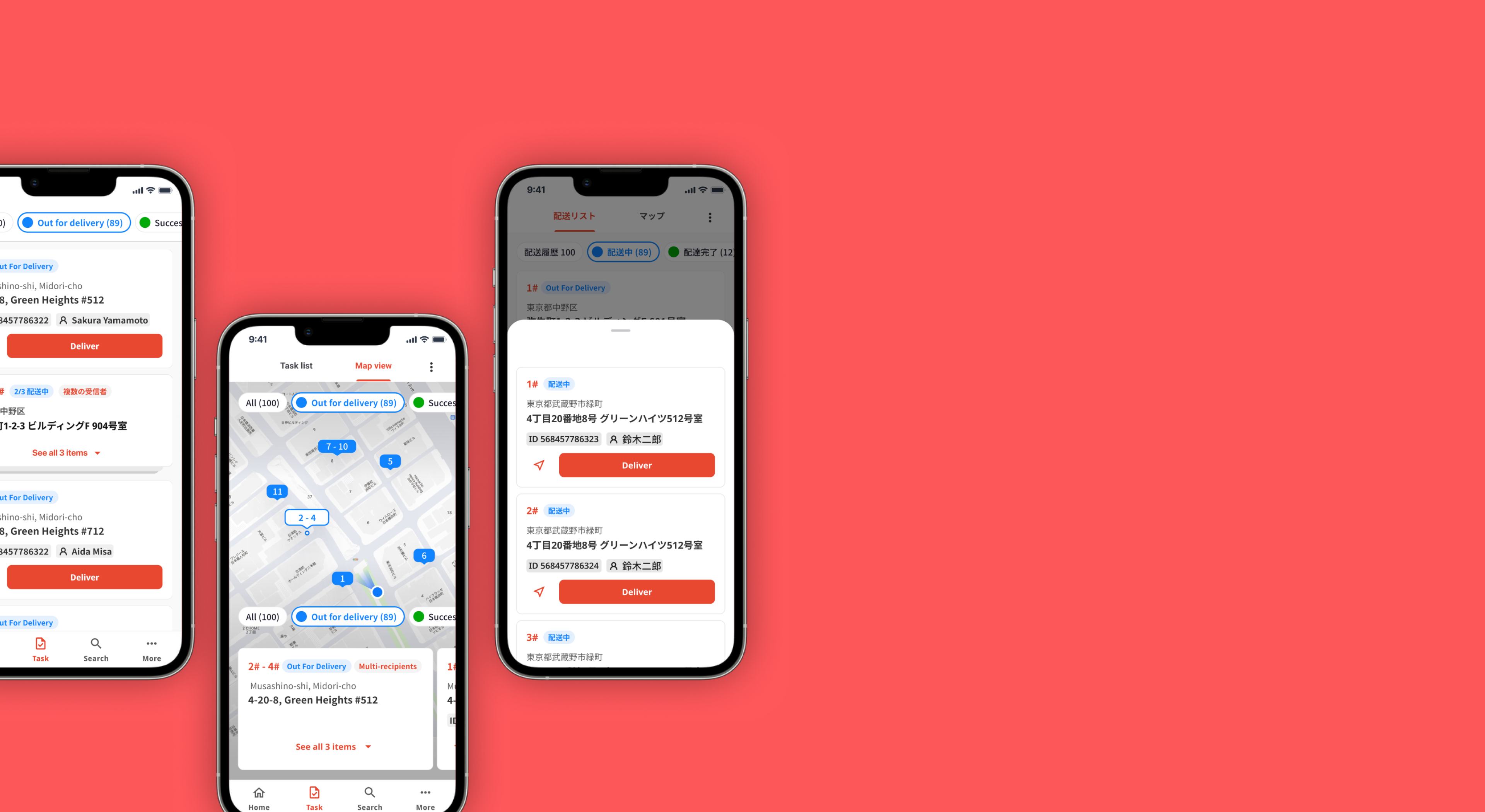
This project involved designing a 0→1 driver-facing delivery app, where our team led the design of the package list and map views to help drivers manage high-volume deliveries accurately and efficiently.

The launched product increased delivery success rates from 92% to 97% and more than doubled Espoirer’s order volume, creating a measurable impact on daily operations and business growth.

02 / Problems

Espoirer’s original workflow (Manager system plus paper version) lacked a clear, driver-oriented interface for managing high-volume deliveries. Drivers faced unclear information hierarchy, repetitive operational steps, and address formats that did not align with local delivery realities, especially in Japan.

These issues resulted in delivery errors, slower completion times, and poor traceability between drivers and the administrative system.

03 / Design Goals

  • Help drivers quickly identify the correct package and destination

  • Optimize workflows for both experienced drivers and first-time users

  • Reduce delivery errors through structured, scannable information

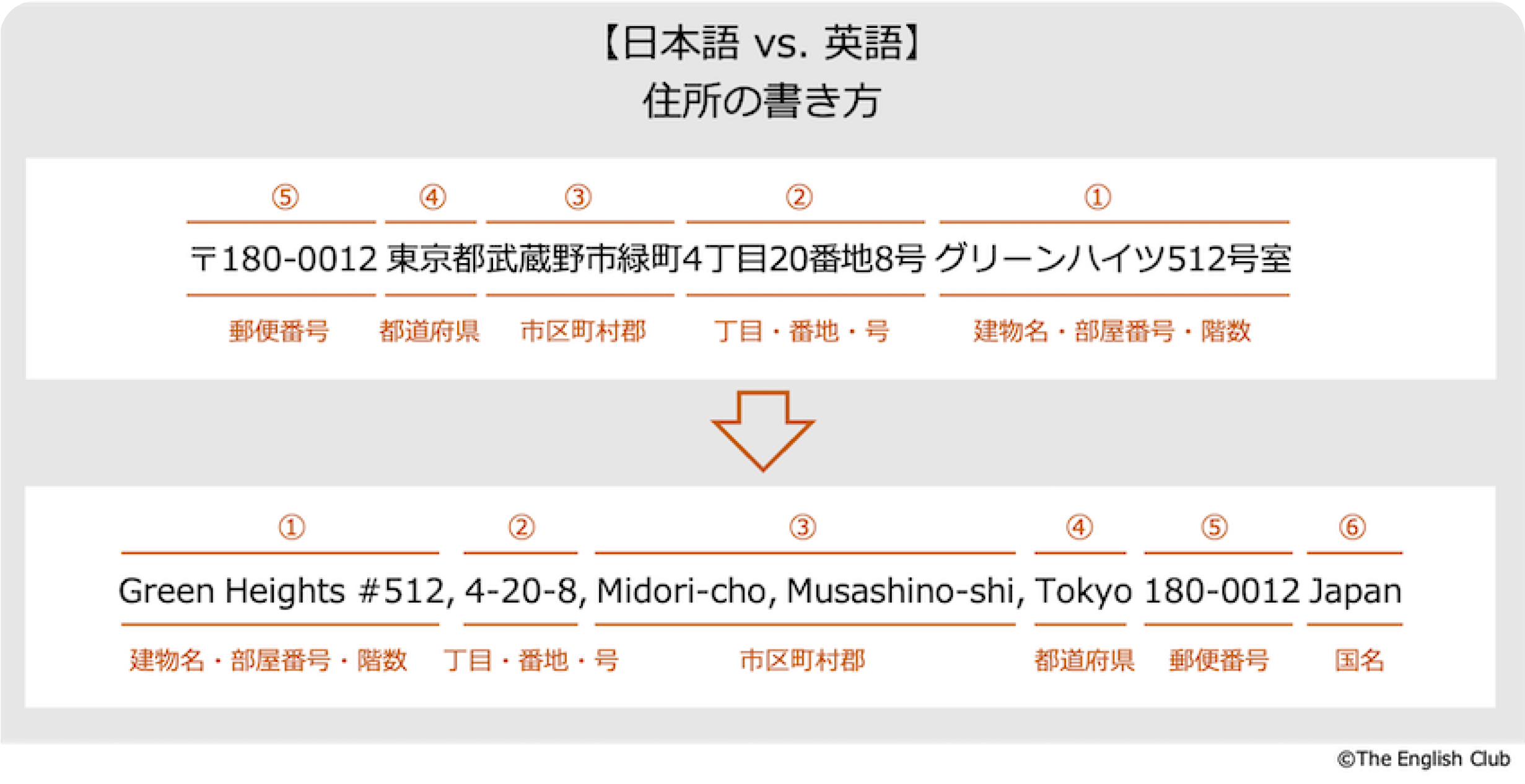
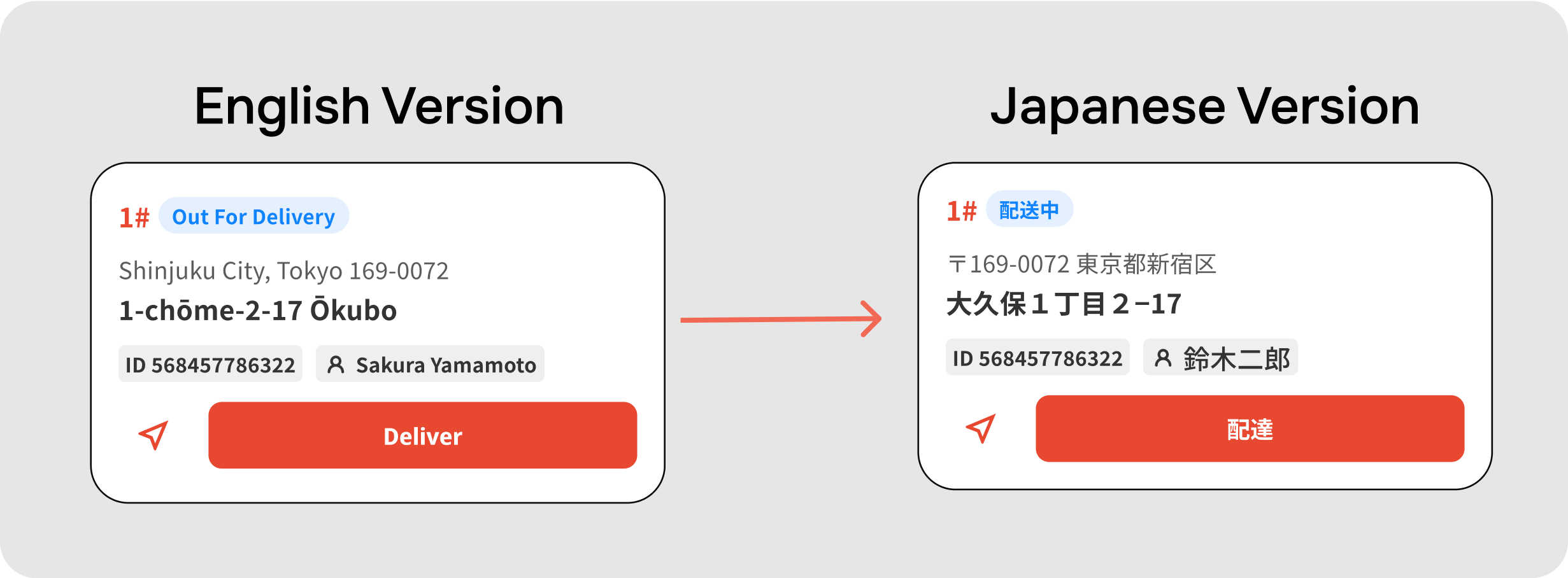
  • Support Japanese address formats and delivery custom

  • Maintain system-wide data integrity with the admin platform

04 / Design Challenges

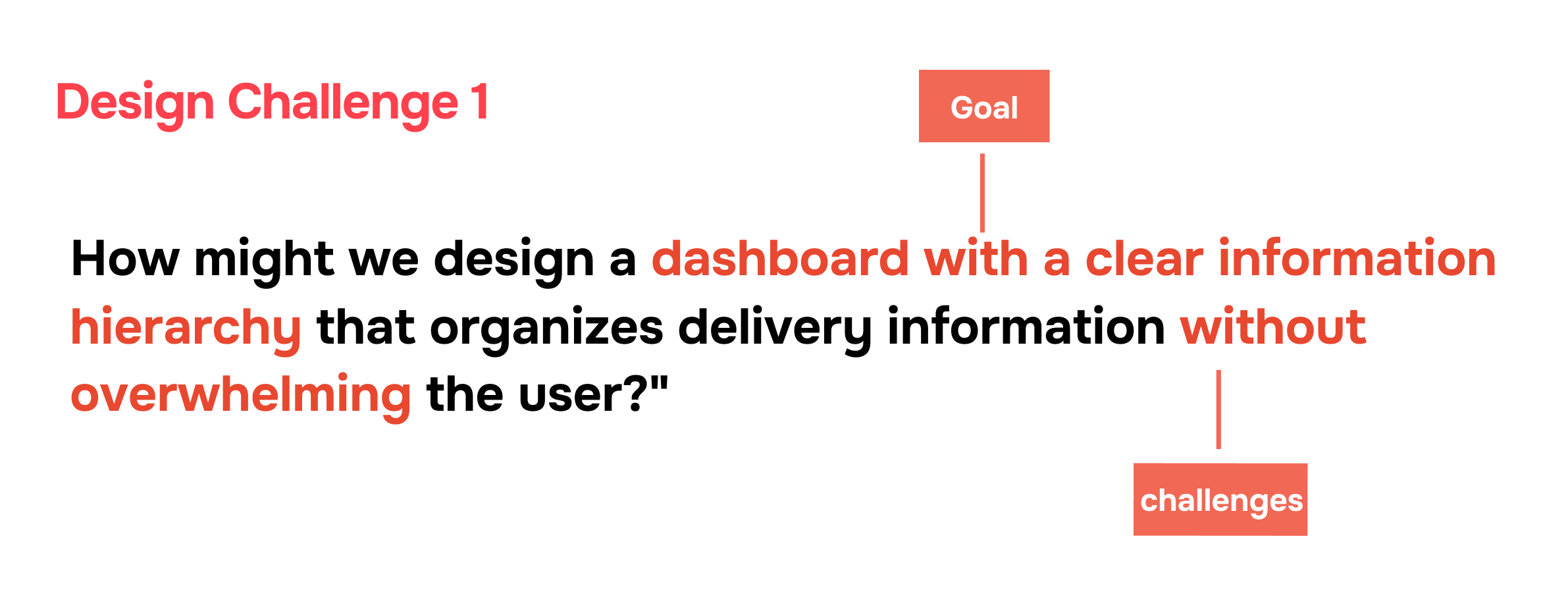
1. Unclear information hierarchy in high-density delivery lists
2. Designing primarily for experienced drivers who value speed over guidance
3. Localization challenges, including Japanese address formatting and communication norms

Information

-Type
/Mobile App Design
-Device
/iOS and Android
-My Role
Design Lead in team
-Design Methods
Contextual Inquiry | Task Analysis | Participatory Design | Card Sorting | Cognitive Walkthrough | MVP (Minimum Viable Product) Planning | Iterative Design
Visit    ->

How we first understand the project?

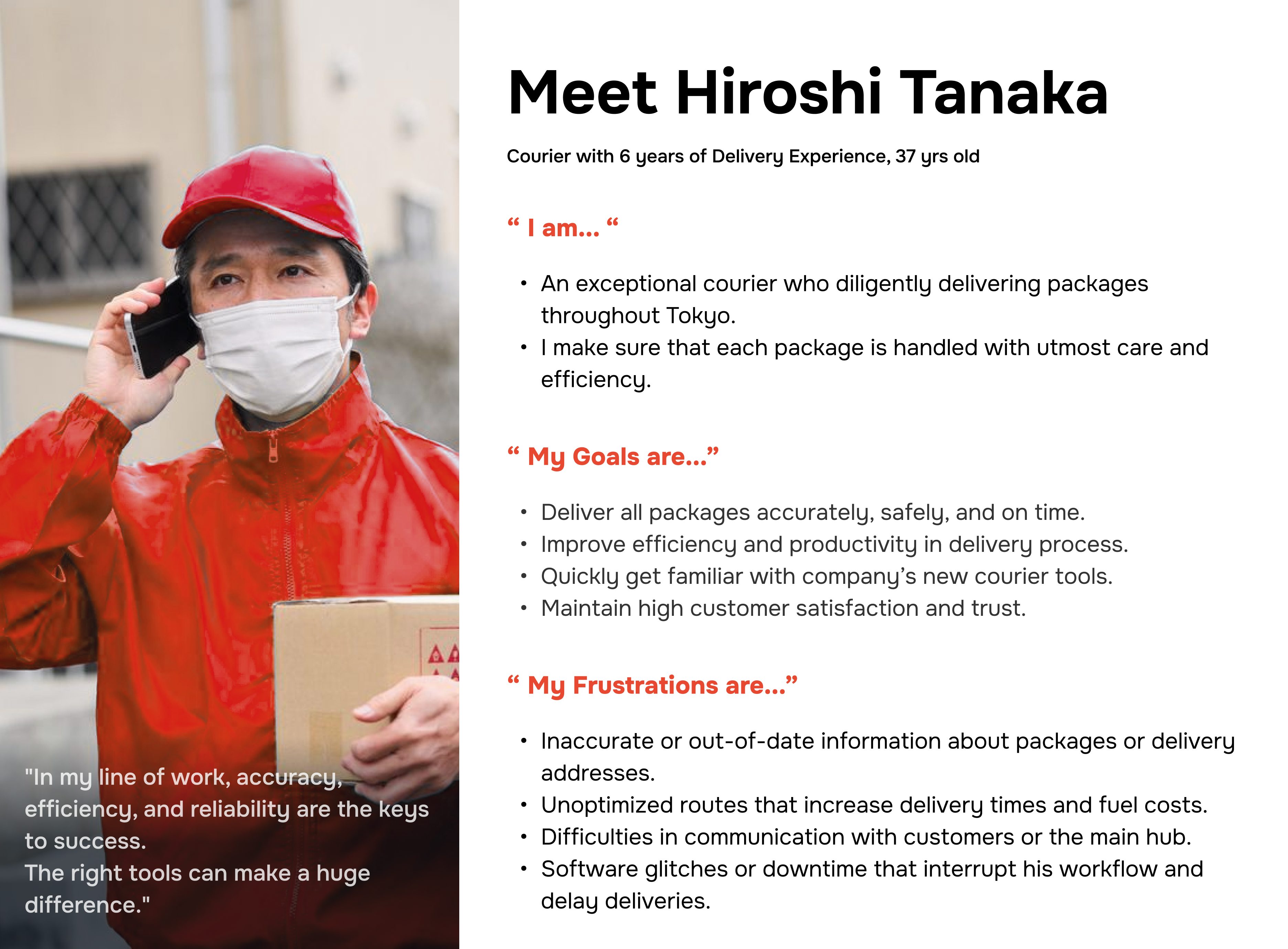
01 Who are the direct users?

We conducted 8 in-depth interviews with local delivery drivers and performed contextual inquiry during real delivery routes.
Key Insights: Drivers do not “read” the app — they scan, memorize, and act.
02 User Journey

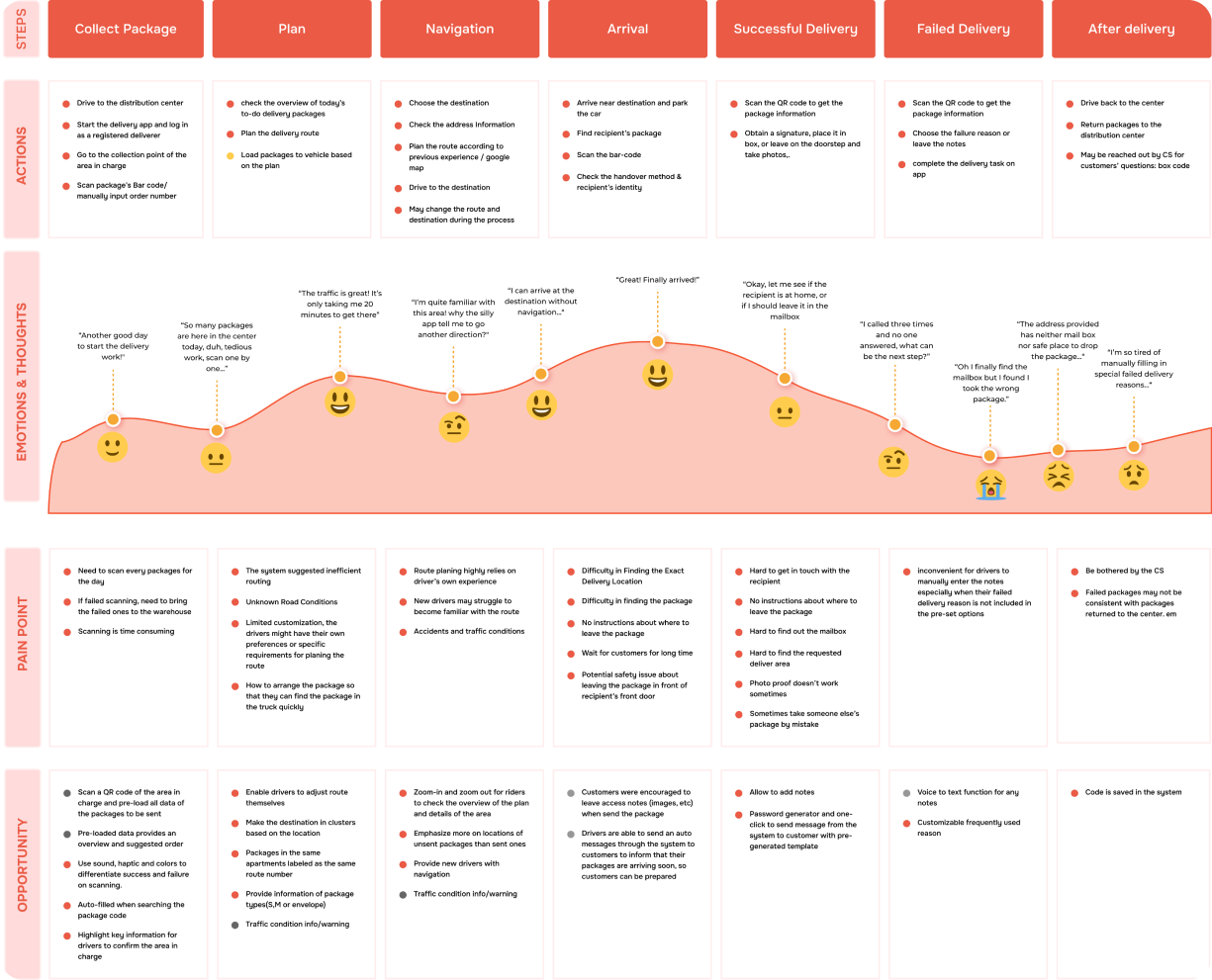
Since it is a 0-1 design, we create a journey map after contextual inquiry to meet the localized requirements. In the user journey map, each stop offered a glimpse into the challenges that couriers like Hiroshi faced, drawing a path that demanded a new blueprint for efficiency and satisfaction.
03 Summary of Pain points

Planning
Couriers encounter difficulties in filtering and sorting delivery information, and overwhelmed with various delivery statuses
Navigation
Couriers' local knowledge clashes with app-generated route plans
DeliveryInfo
Couriers struggle to quickly locate important delivery information due to a cluttered and disorganized dashboard layout.
Localization
The app's design and user experience do not align with cultural norms and aesthetics, leading to a disconnect with Japanese users.

04 Competitive Analysis

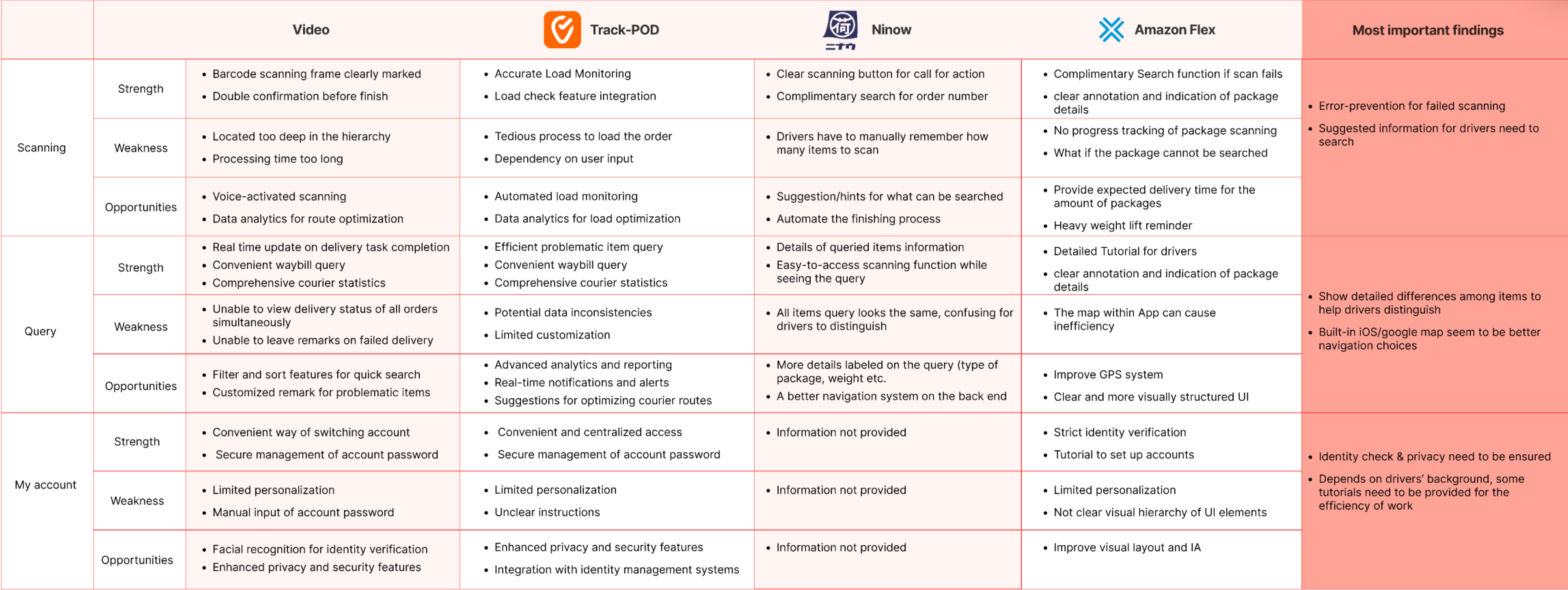
We analyzed the best courier apps in the U.S. and in Japan. Combine the special needs in the Japanese market, got instructional insights and opportunities.

And through the competitive research, we summarized insights👇

Planning

Track or show order delivery status by different filters
Provide map integration

Navigation

Allow driver to customize the routes
Balance experienced and new drivers

Delivery

Simplify user flow
Provide real-time updated & recipients notification

Localization

Able to track or show order delivery status by different filters
Provide map integration

05 User Flow Redesign

01 Whole Flow

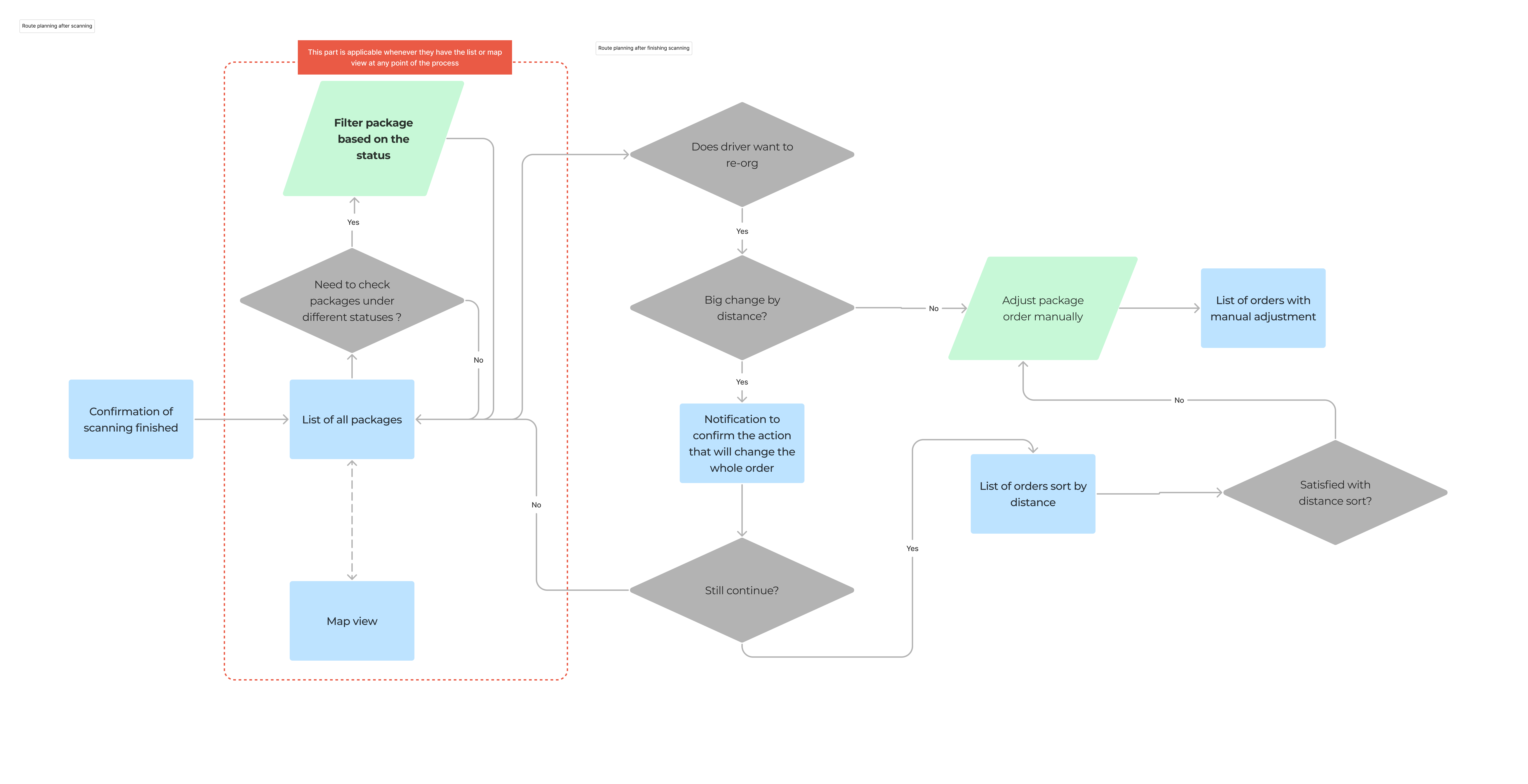
Based on the research findings, we created a 102 step complete user flow.

02 Plan Part

03 Delivery Part

Design process

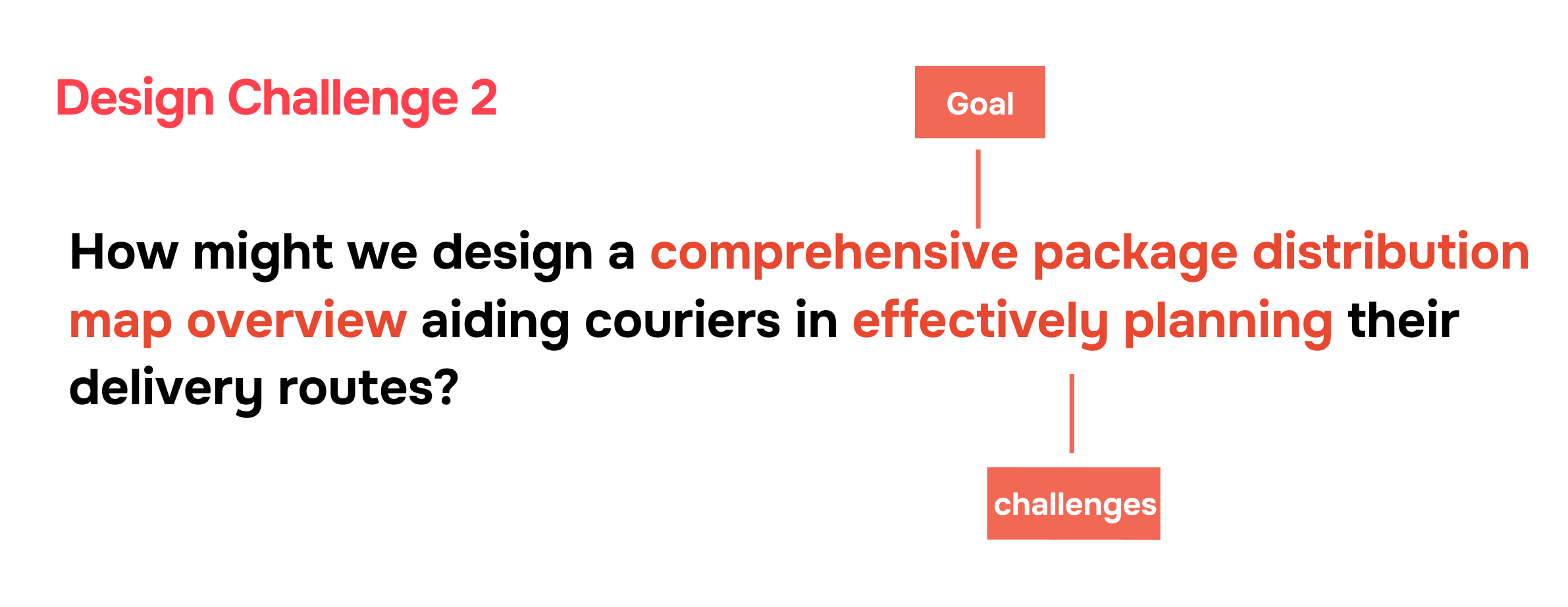
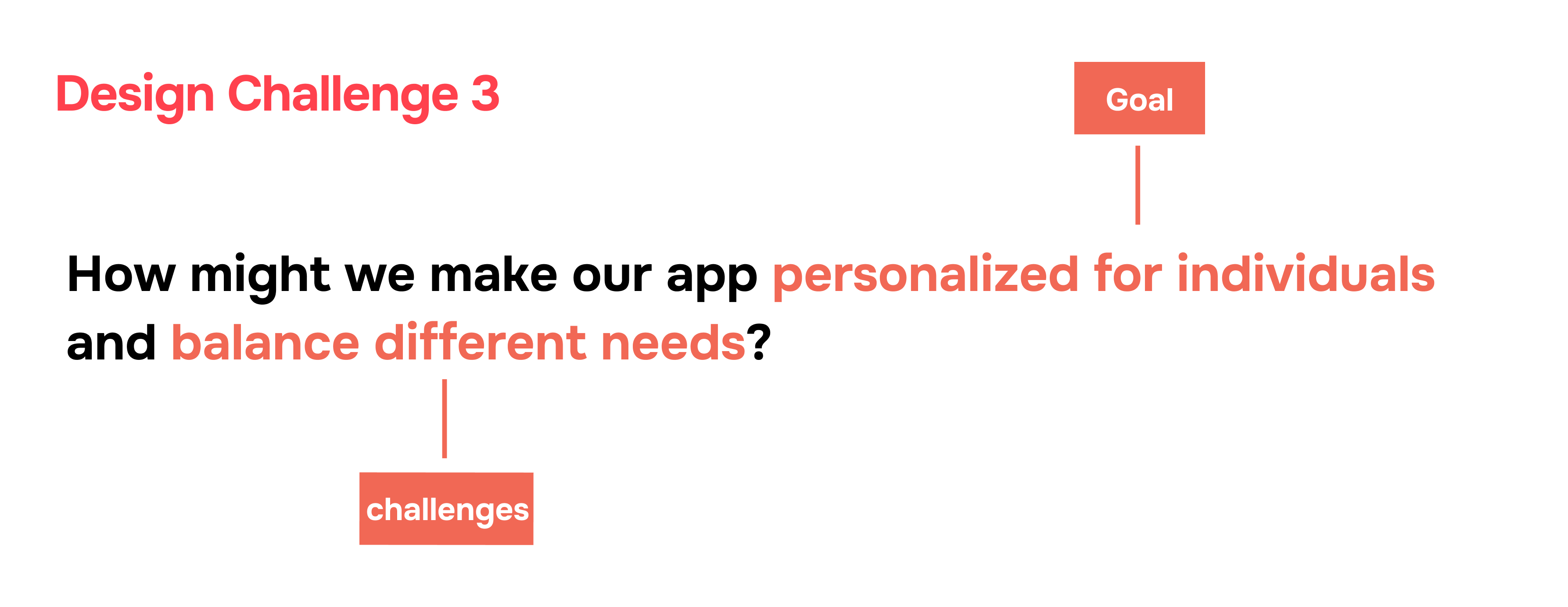
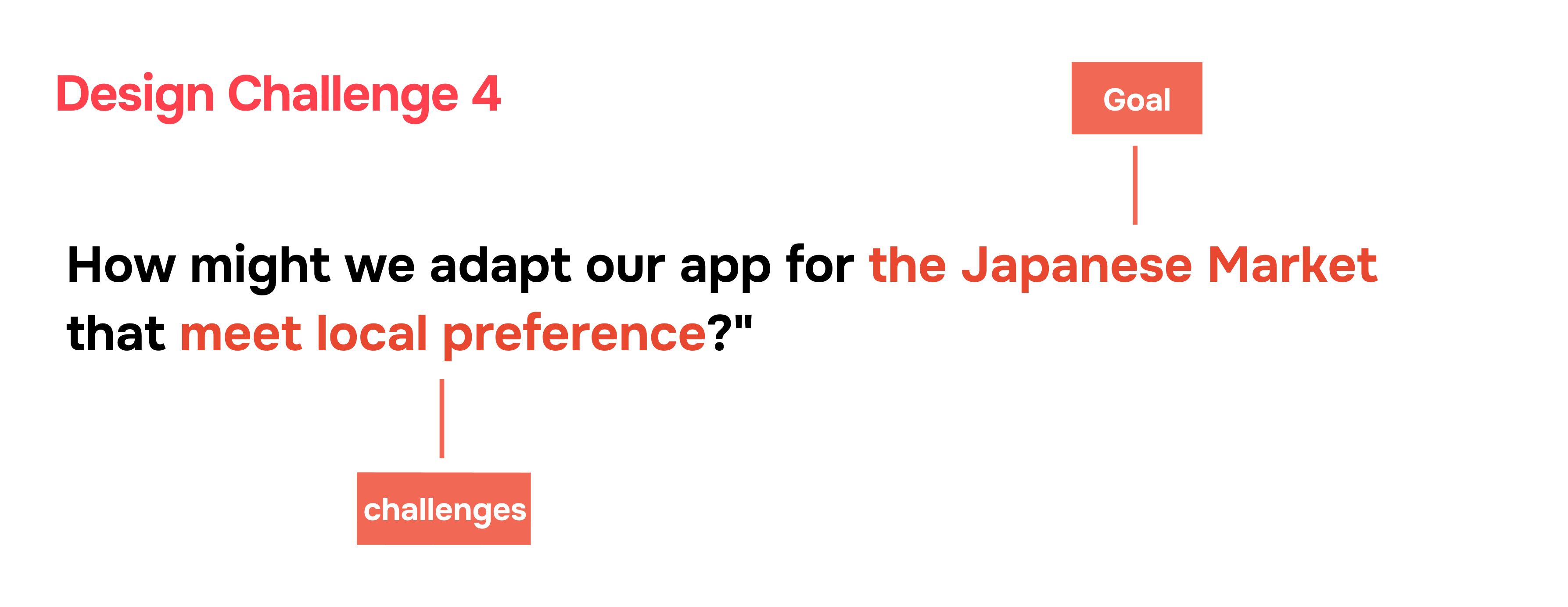
We defined four main design challenges, with the HMWs
01 Information Display

02 Intricate logical Relationships

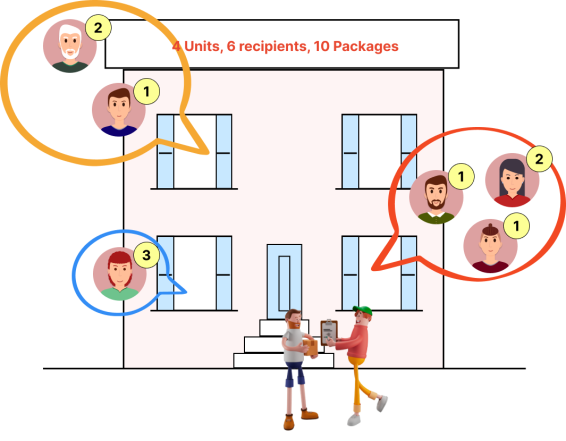
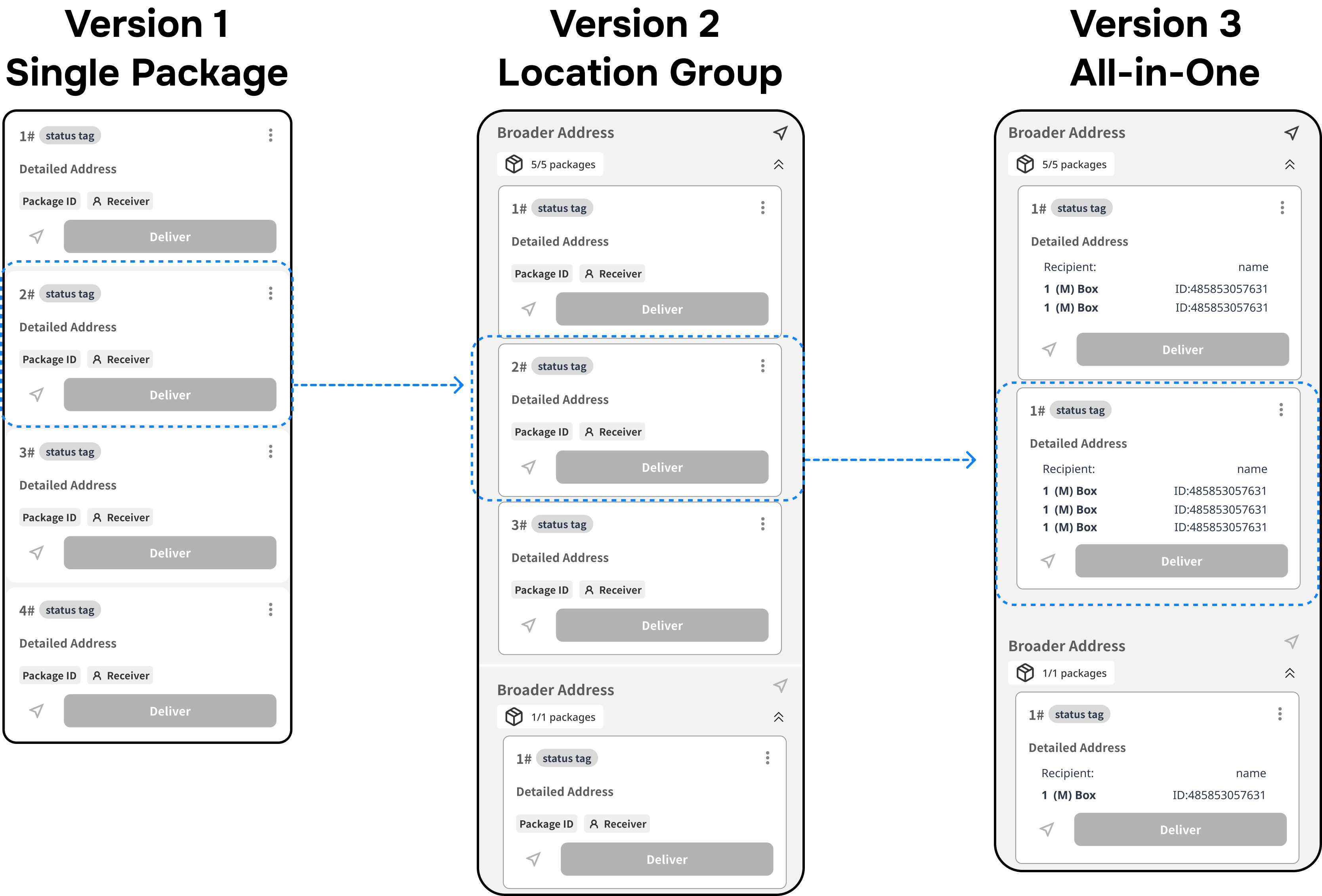
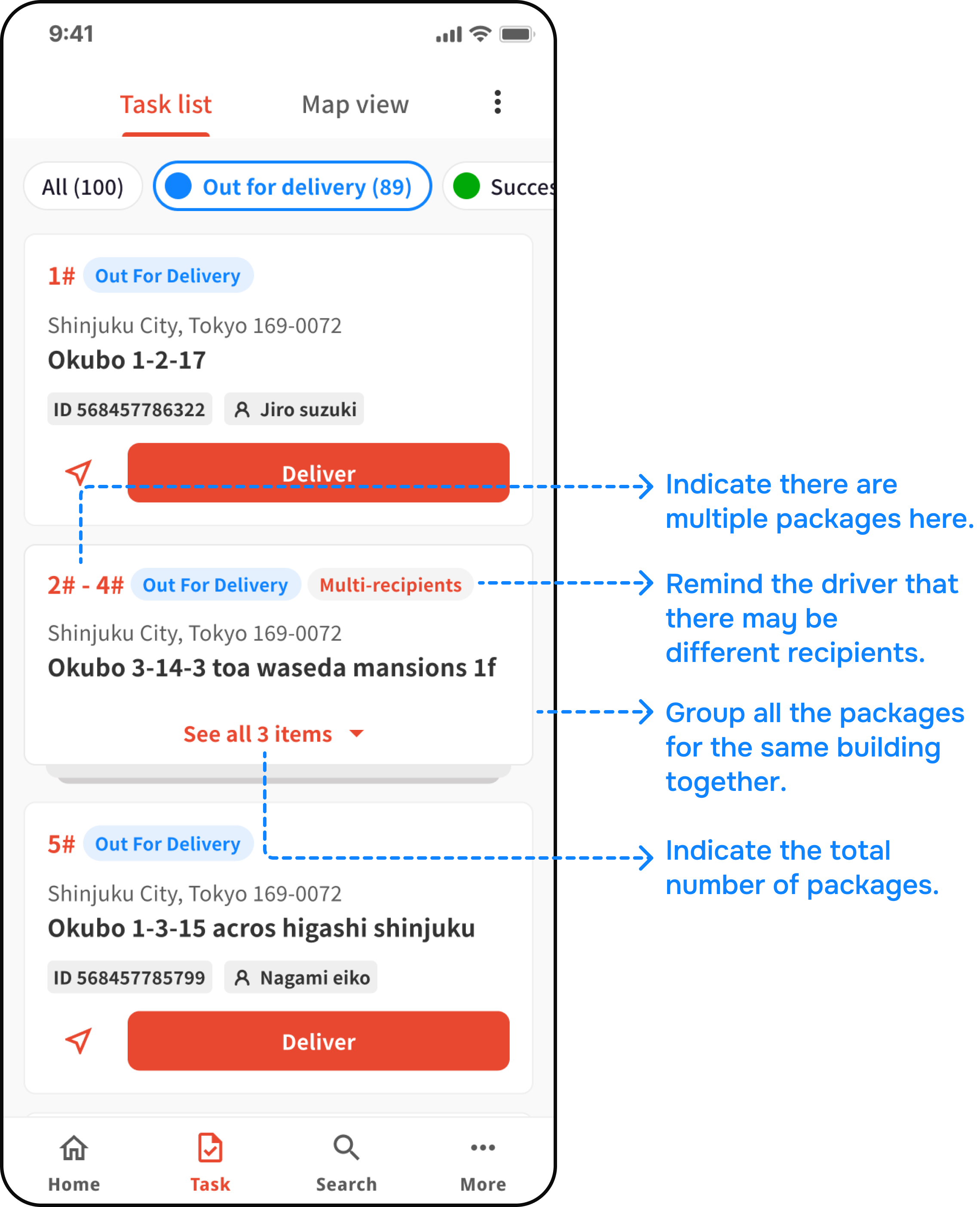
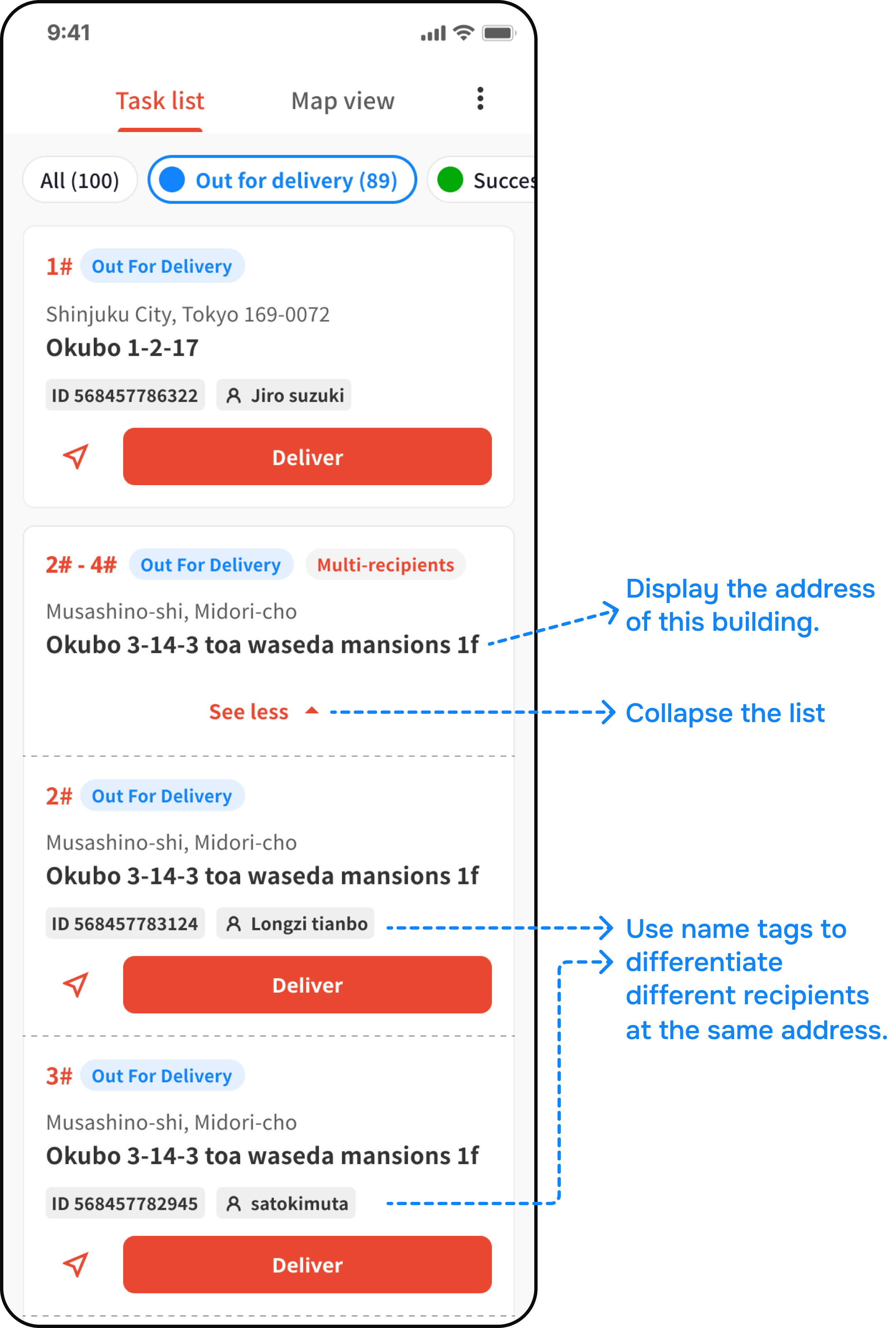
How might we design a List View seamlessly facilitates delivery completion for couriers?

Especially considering the intricate logical relationships between recipients and packages

  • Different buildings within the same area
  • Different rooms within the same building
  • Different recipients within the same room
  • Multiple packages for the same recipient

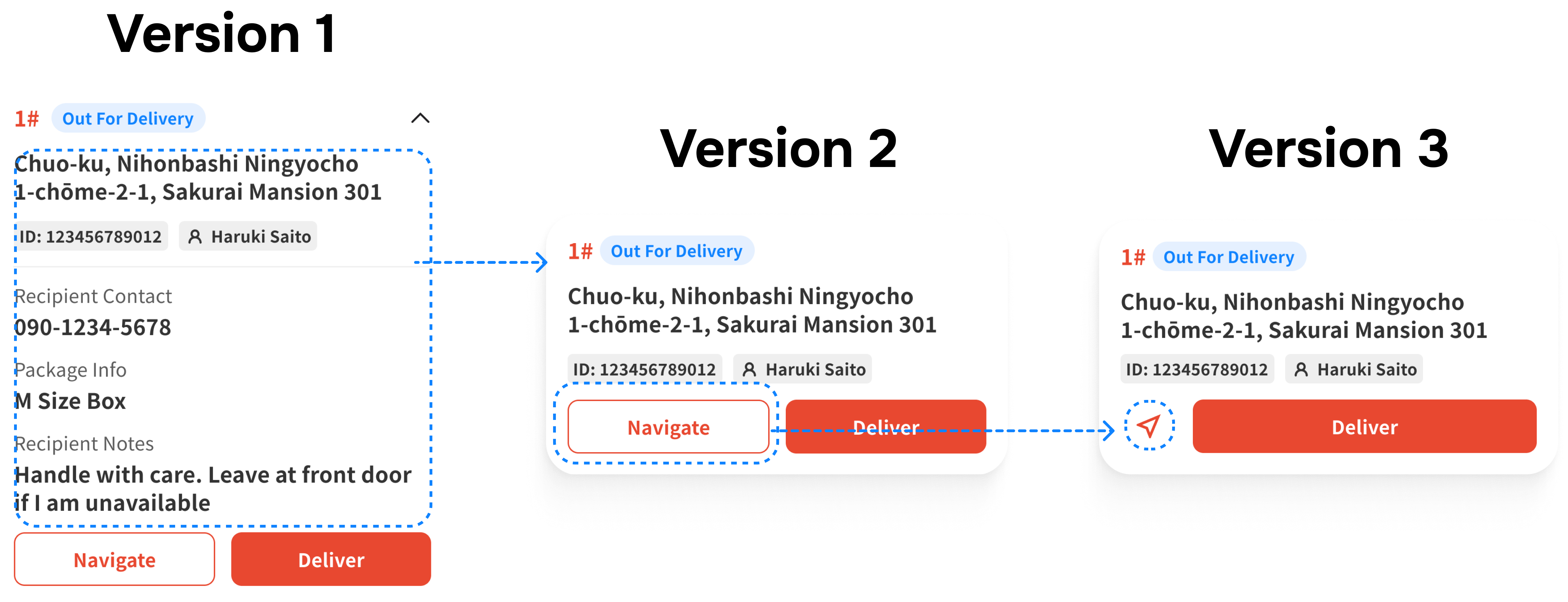
03 Iteration on Cards

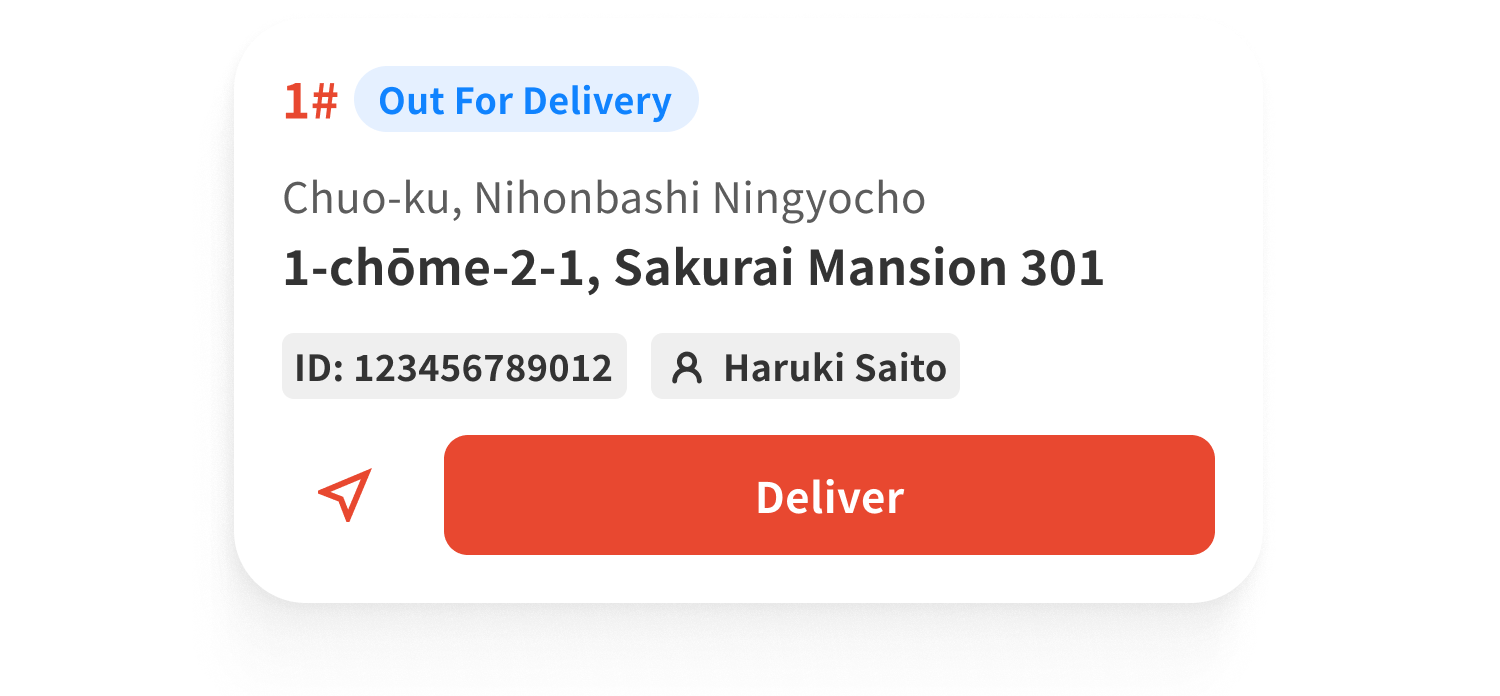
Final Design

04 Iteration on List View

Final Design

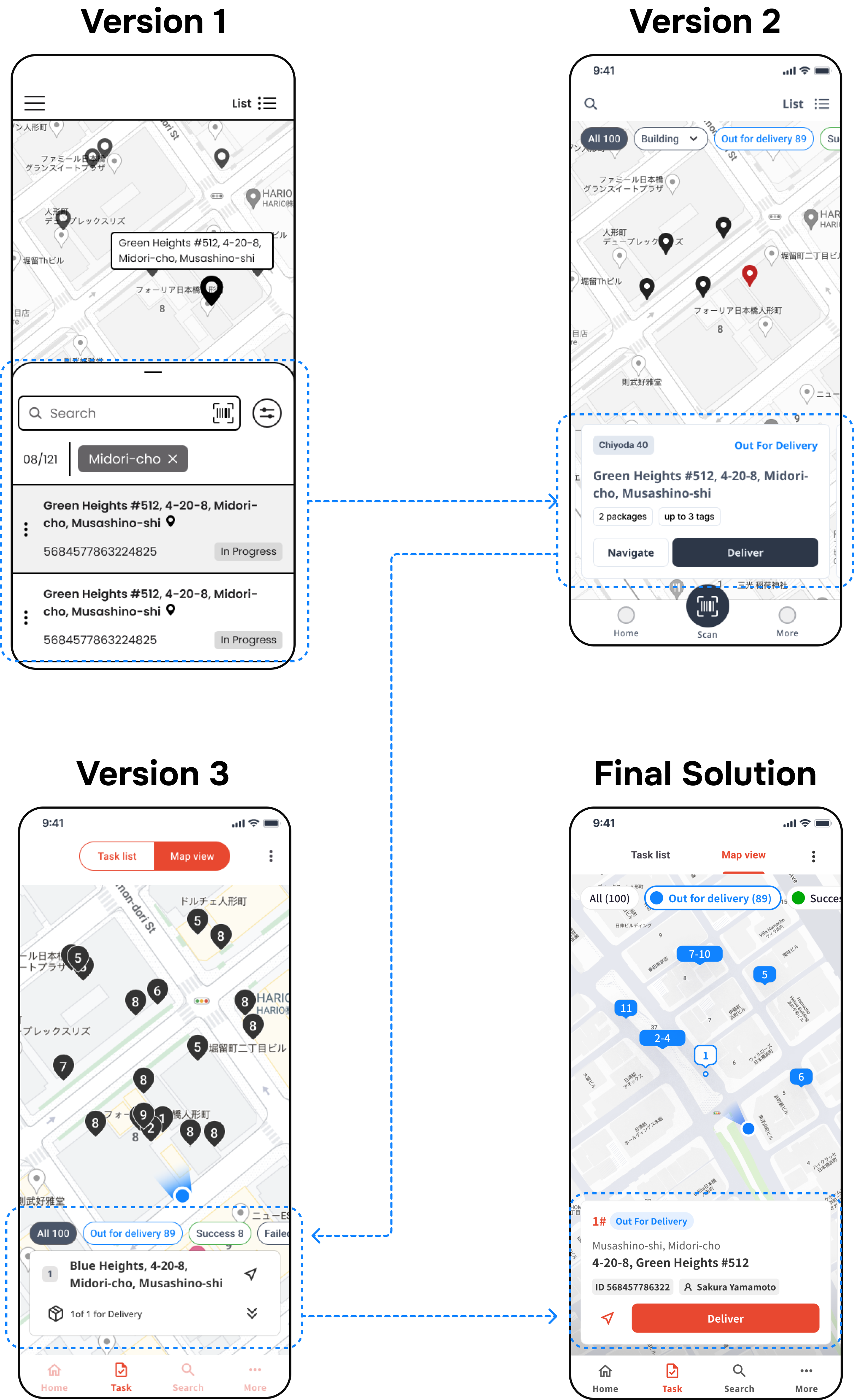
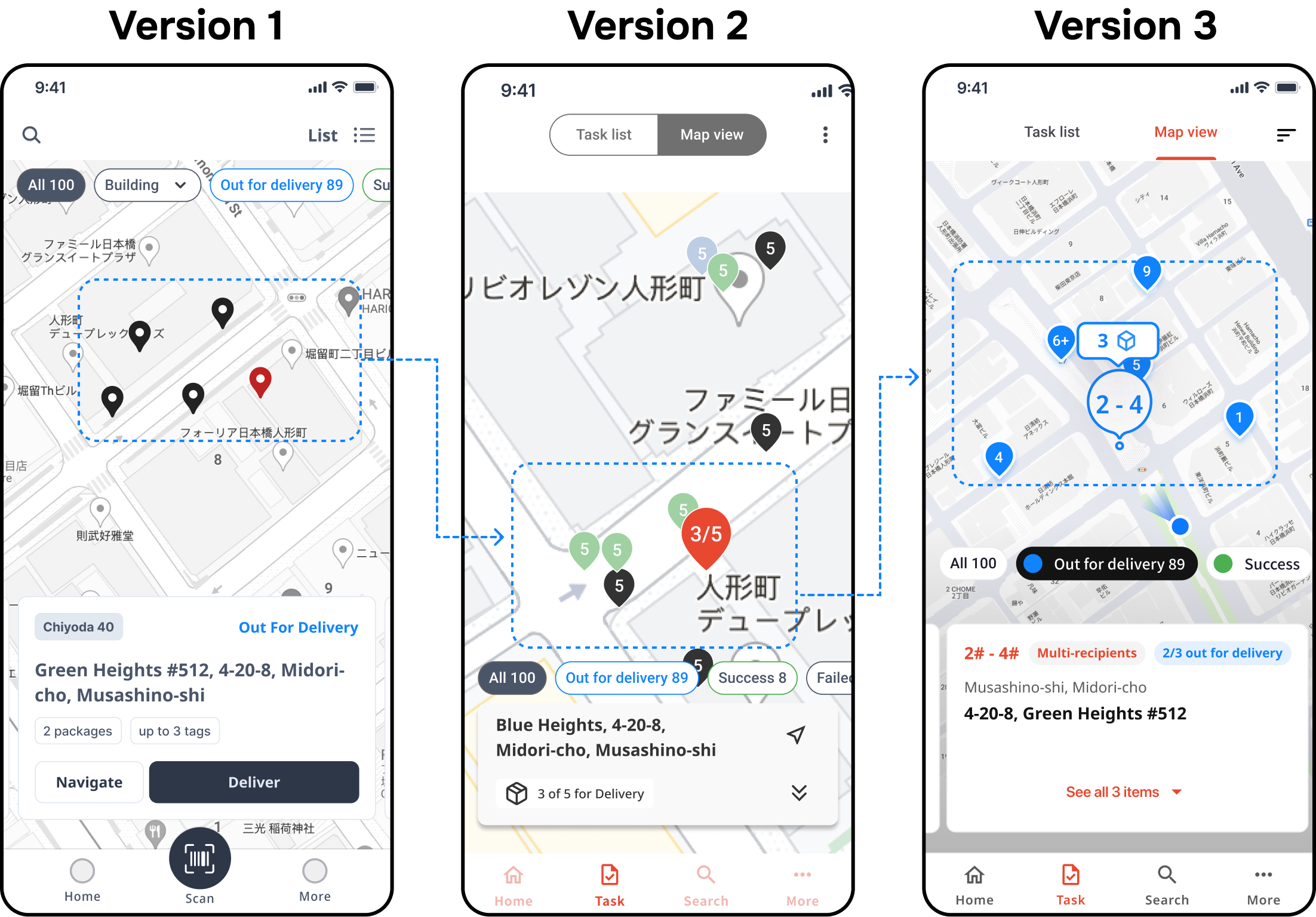
01 Iteration on Map View

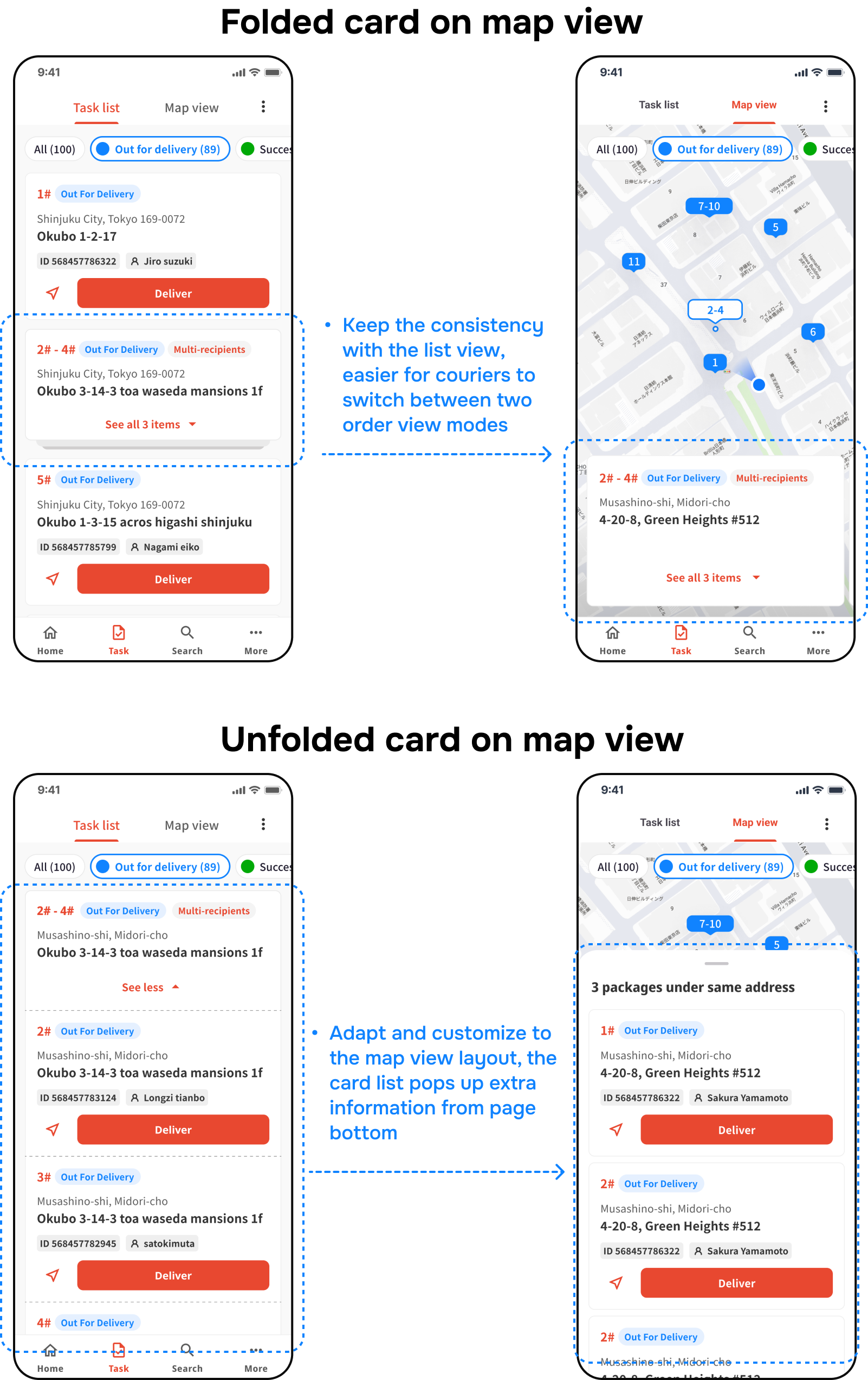
02 Iteration on Map view - Information Card

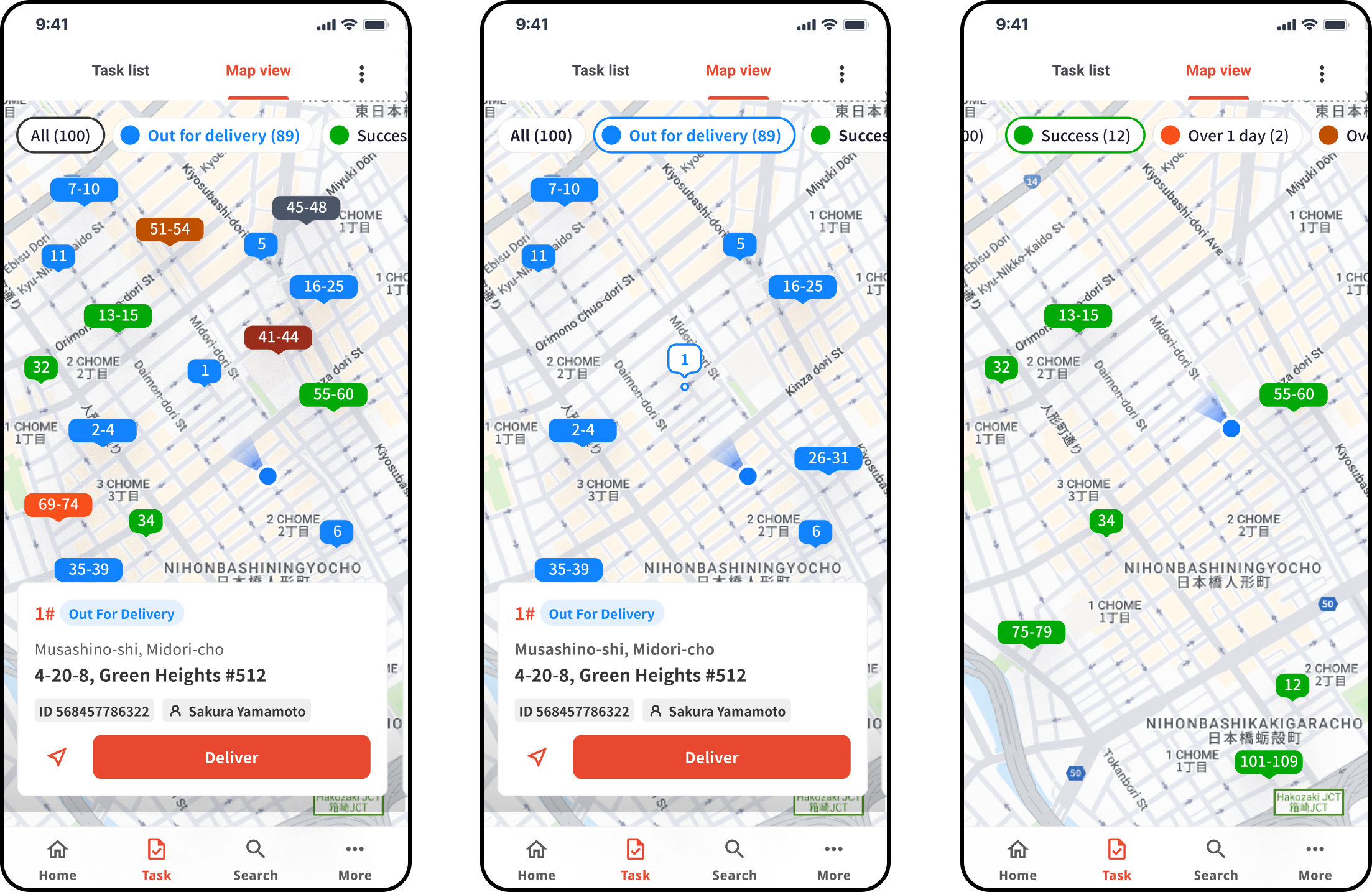
03 Iteration on Map view - Selection

Final Design

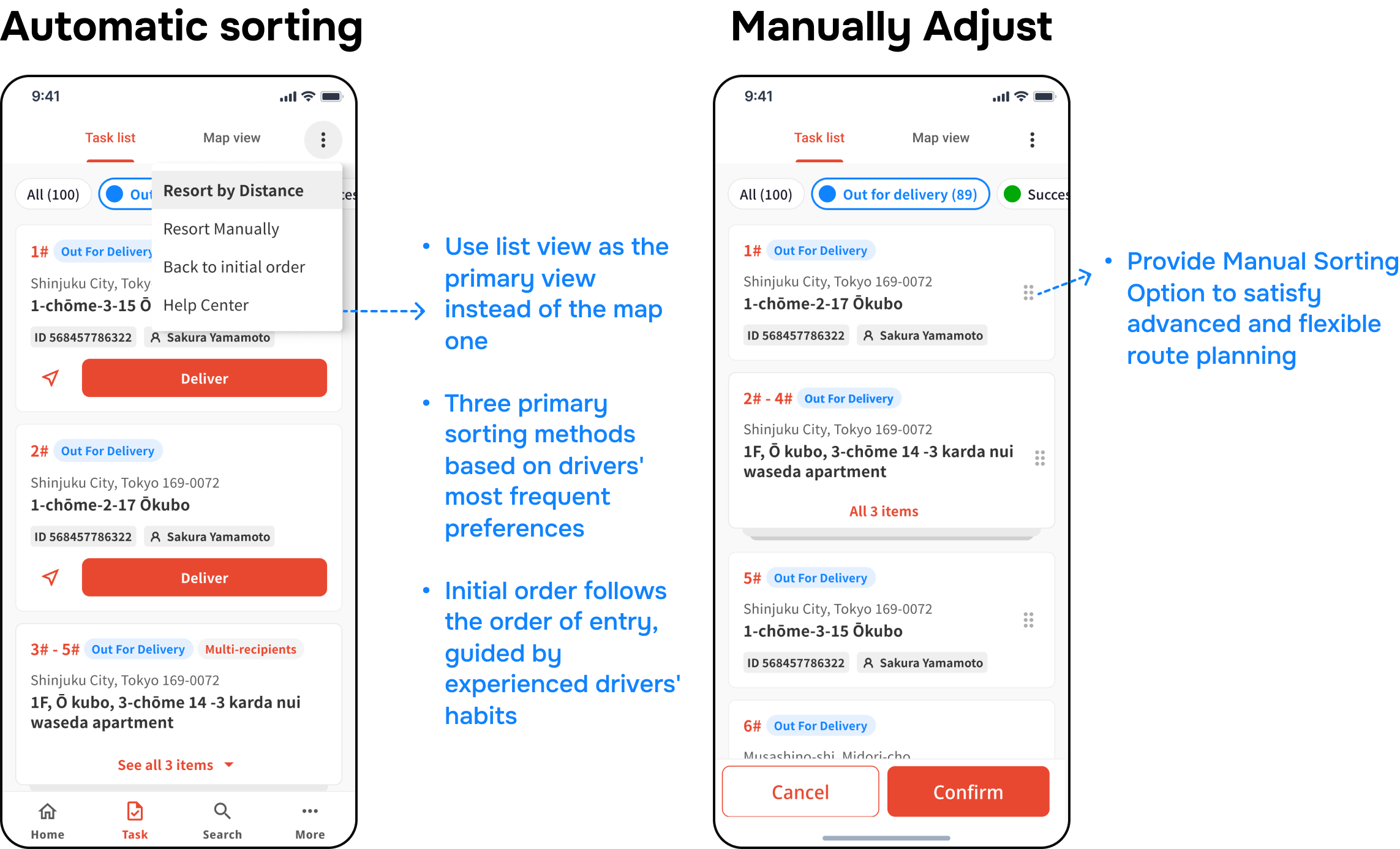
01 Personalize Delivery Habits

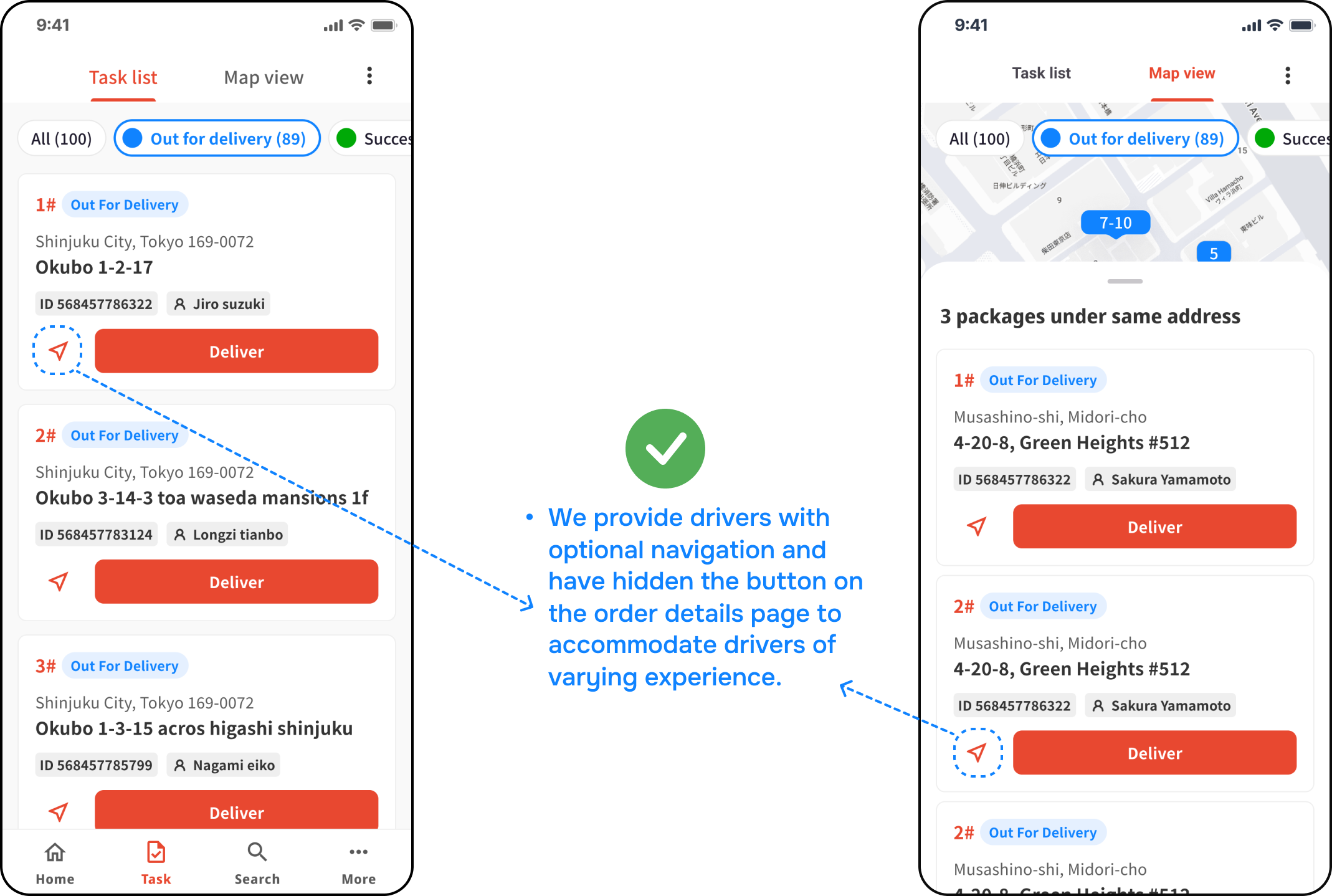
Optionalize Navigation Function

01 Special formatting of Japanese addresses

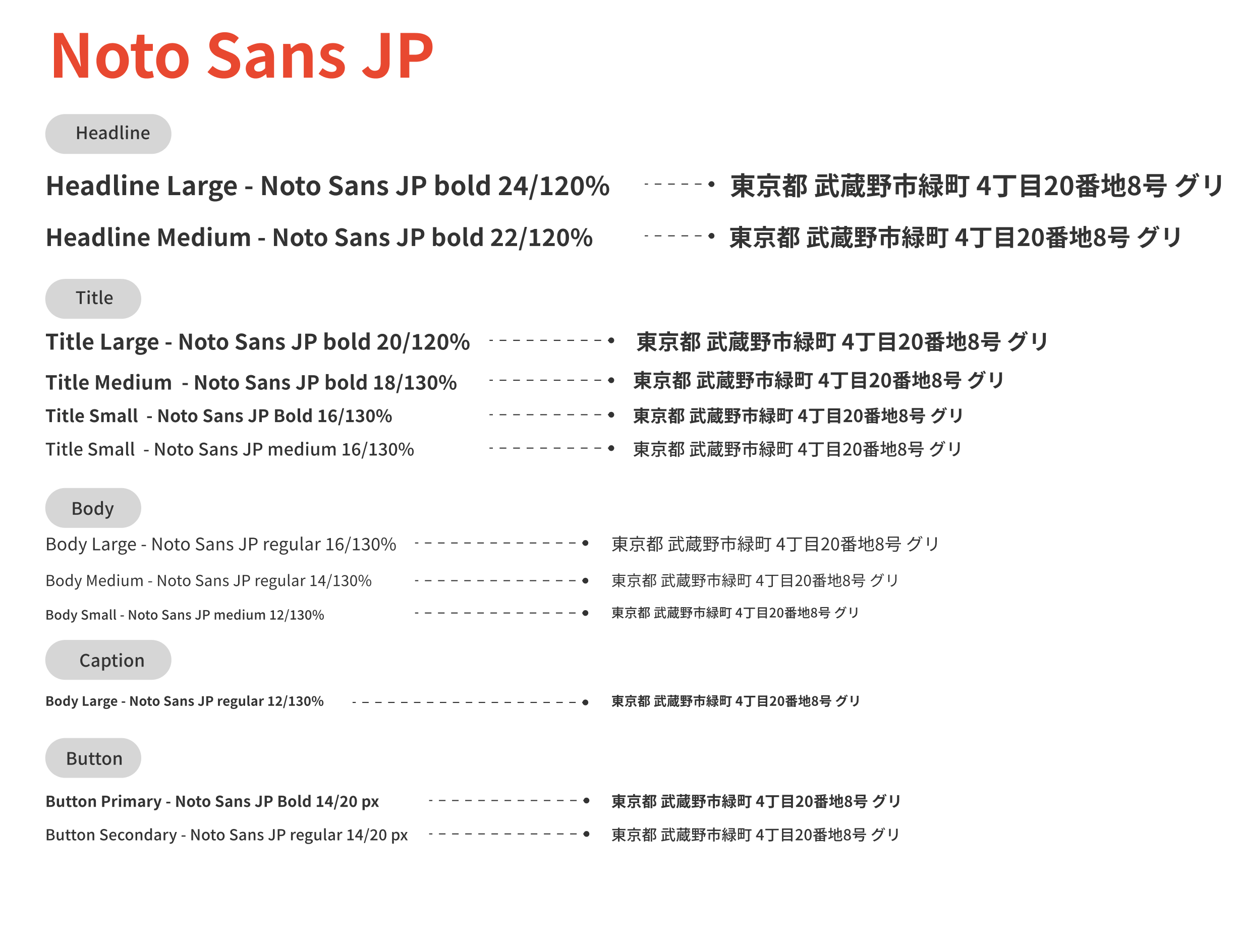
02 Font Choice to balance multiple languages

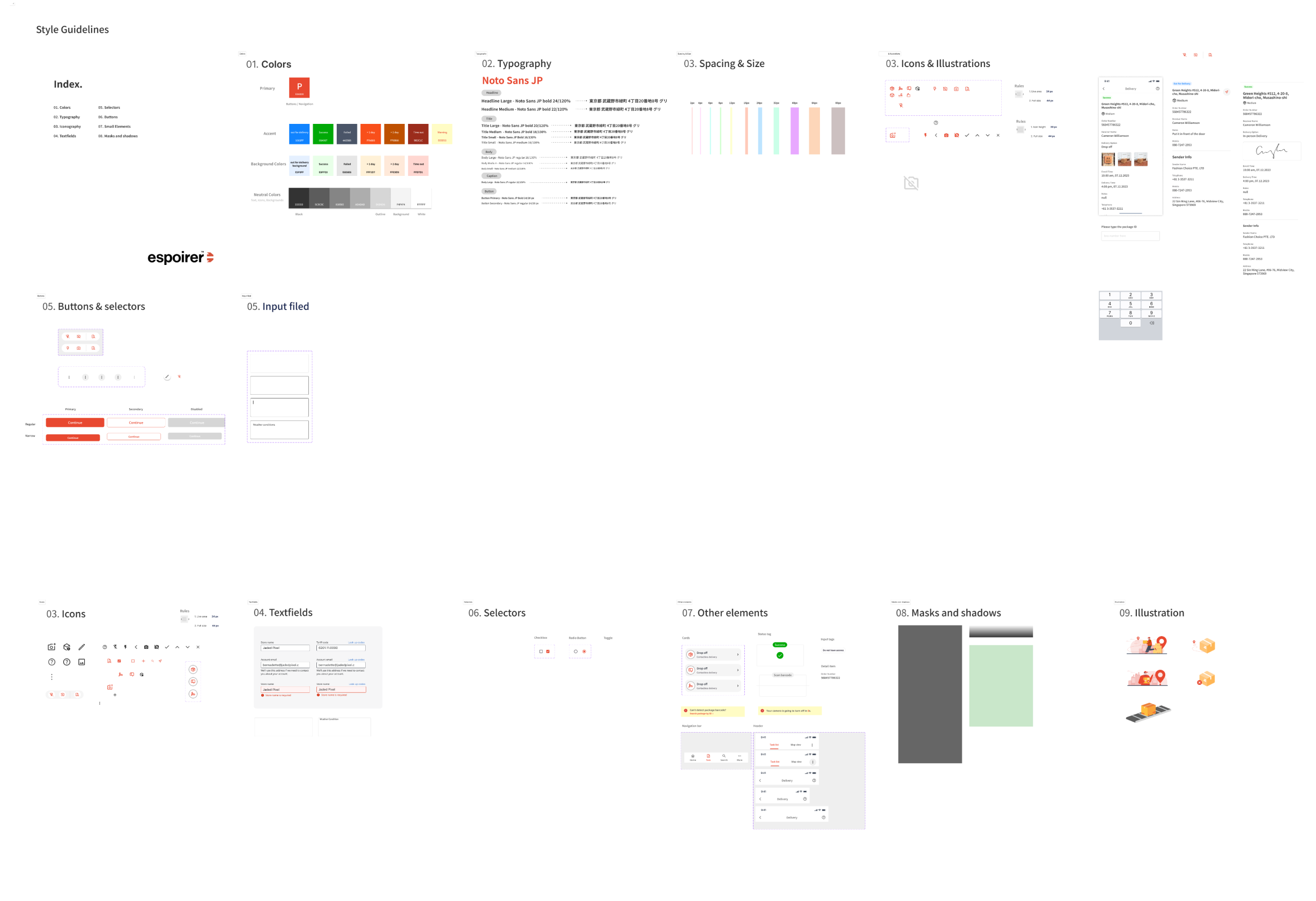
Design System

Post Project

Next Steps
  • According to the performance data obtained from user testing by Expoirer, further improve the user experience .
Takeaways
  • The internal business logic of 2B products is very complex, and there are many intersection points. It is a big challenge to ensure that the data the process is correct. e.g. When scanning before delivery, if the driver scans several packages in a certain range in advance, so the location is inaccurate and the error would be reported, should the error be judged after the delivery method or give the driver the authority to manually override the error report?
  • To design and develop a product from 0-1, different groups are responsible for different feature sets, and the synchronous design needs to consider the smooth flow of connection with feature sets of other groups.
This is some text inside of a div block.