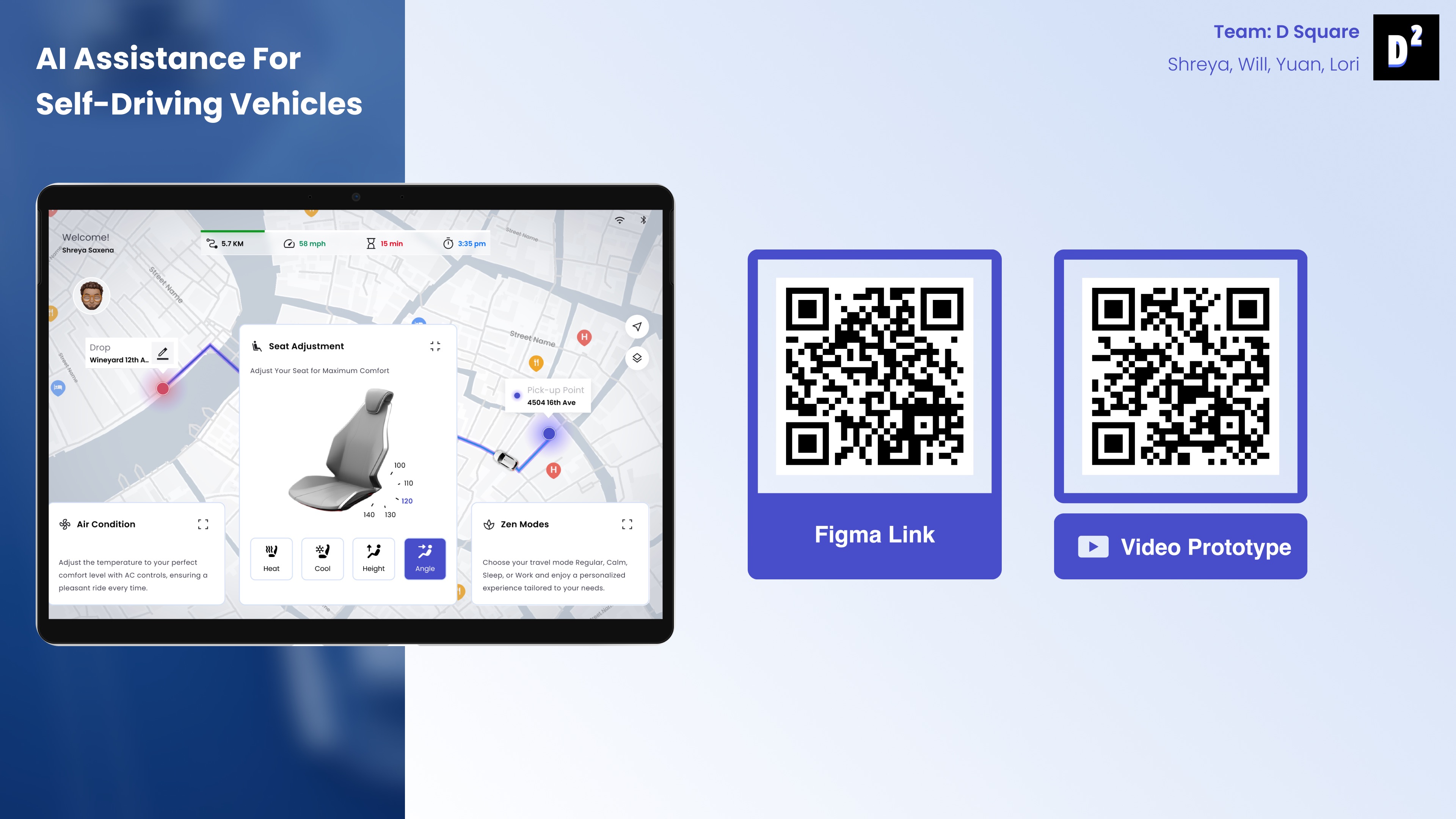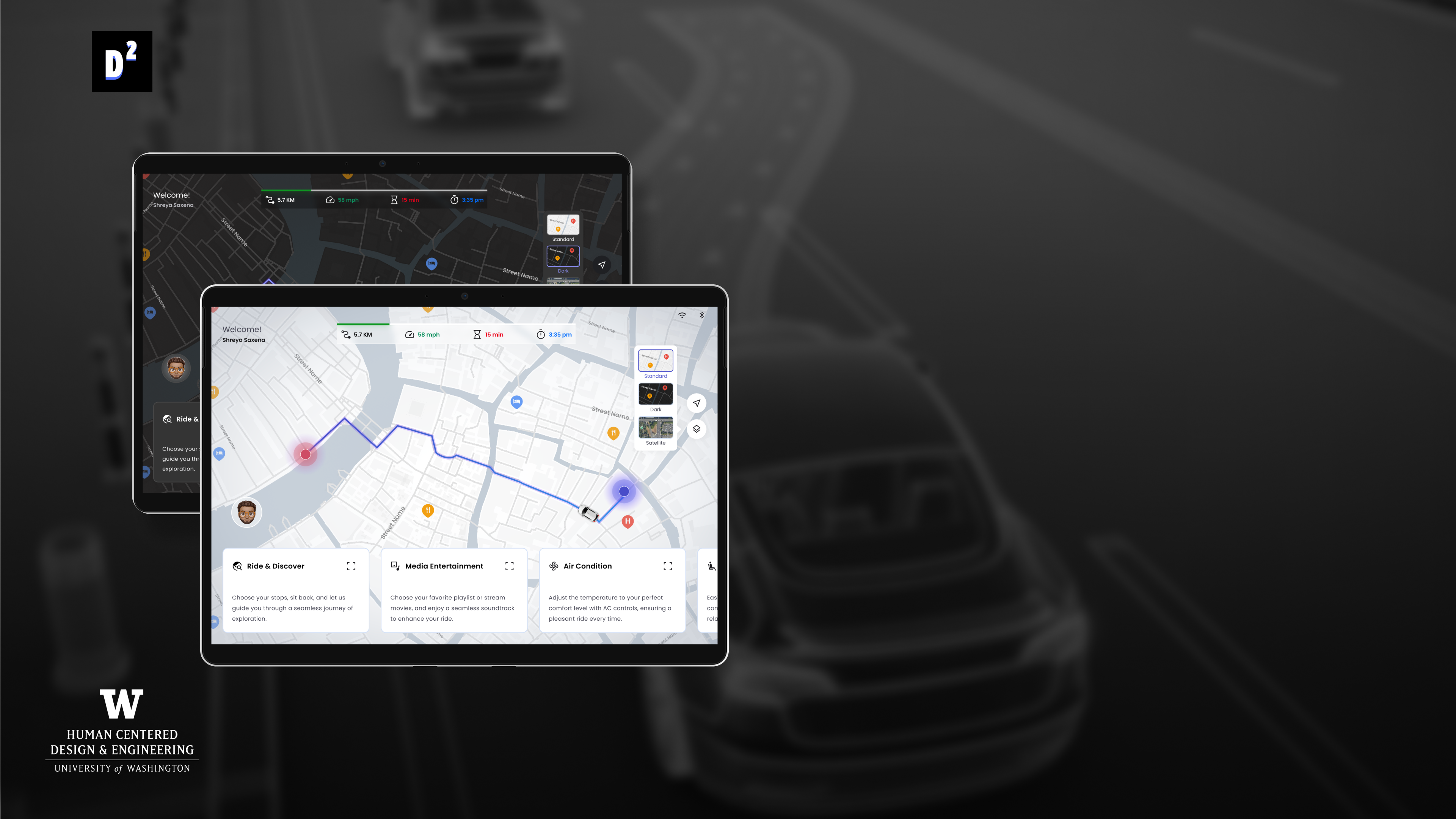
01 / Project overview

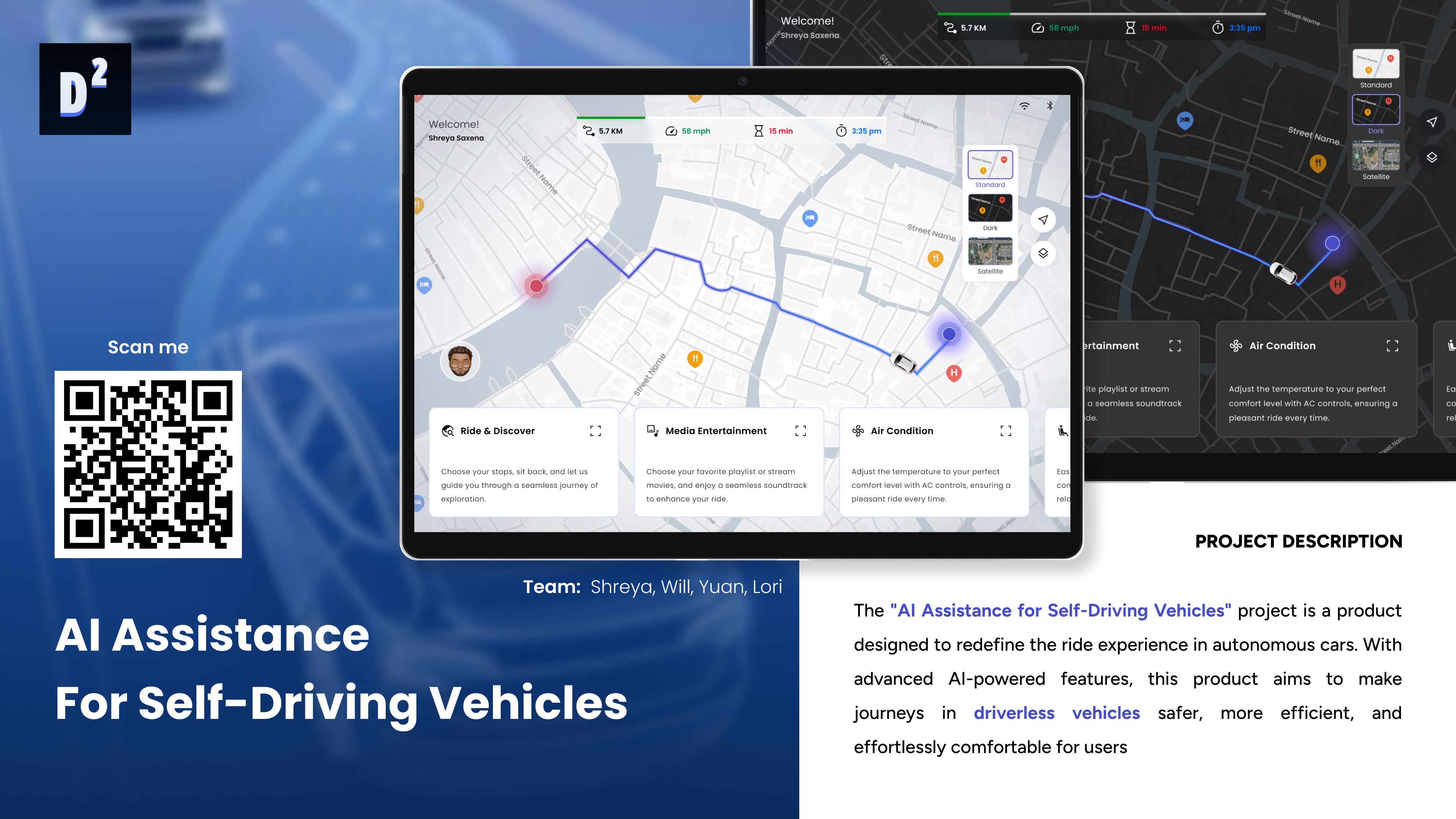
The "Smart Brook" redefines the journey experience in self-driving vehicles by integrating an intelligent, real-time assistant designed to personalize and enhance passenger interactions.
This advanced system not only empowers passengers to highly customize their travel experience—such as city exploration, entertainment, and parking control—but also enhances passenger awareness of decisions made by the car. By offering open, real-time, multimodal agent support, the AI Companion fosters a stronger sense of control and safety, elevating trust and comfort in autonomous transportation.

02 / Design goals

  • Empowered Customization

    Enable passengers to tailor their travel experiences, including exploring cities, selecting entertainment.

  • Multimodal Support

    Provide seamless, real-time interaction through voice, touch, and visual interfaces to ensure accessibility and ease of use.

  • Transparency & Awareness

    Enhance passenger understanding of the vehicle's autonomous decision-making process to build trust and reduce anxiety.

  • Safety & Control

    Deliver features that give passengers a sense of control, such as real-time feedback on the car's operations and the ability to adjust preferences during the journey.

    03 / Design Problem

    How Might We redesign the smart passenger experience to improve their sense of control and safety without strengthening stereotypes of AI systems?
    Information

    -Type
    Multimodal Product Design
    -Platform
    HMI Experience
    -My Role
    UX Designer & Researcher
    Team Members
    Me, Shreya, Yuan, Will

    Our Design Solution--Smart Brook is a multimodal passenger experience for autonomous vehicles that centers on trust, transparency, and perceived control. Rather than hiding complexity, the system reveals how the vehicle thinks and acts in real time—allowing passengers to understand, personalize, and engage with the journey through an AI companion.

    01 — Research Process

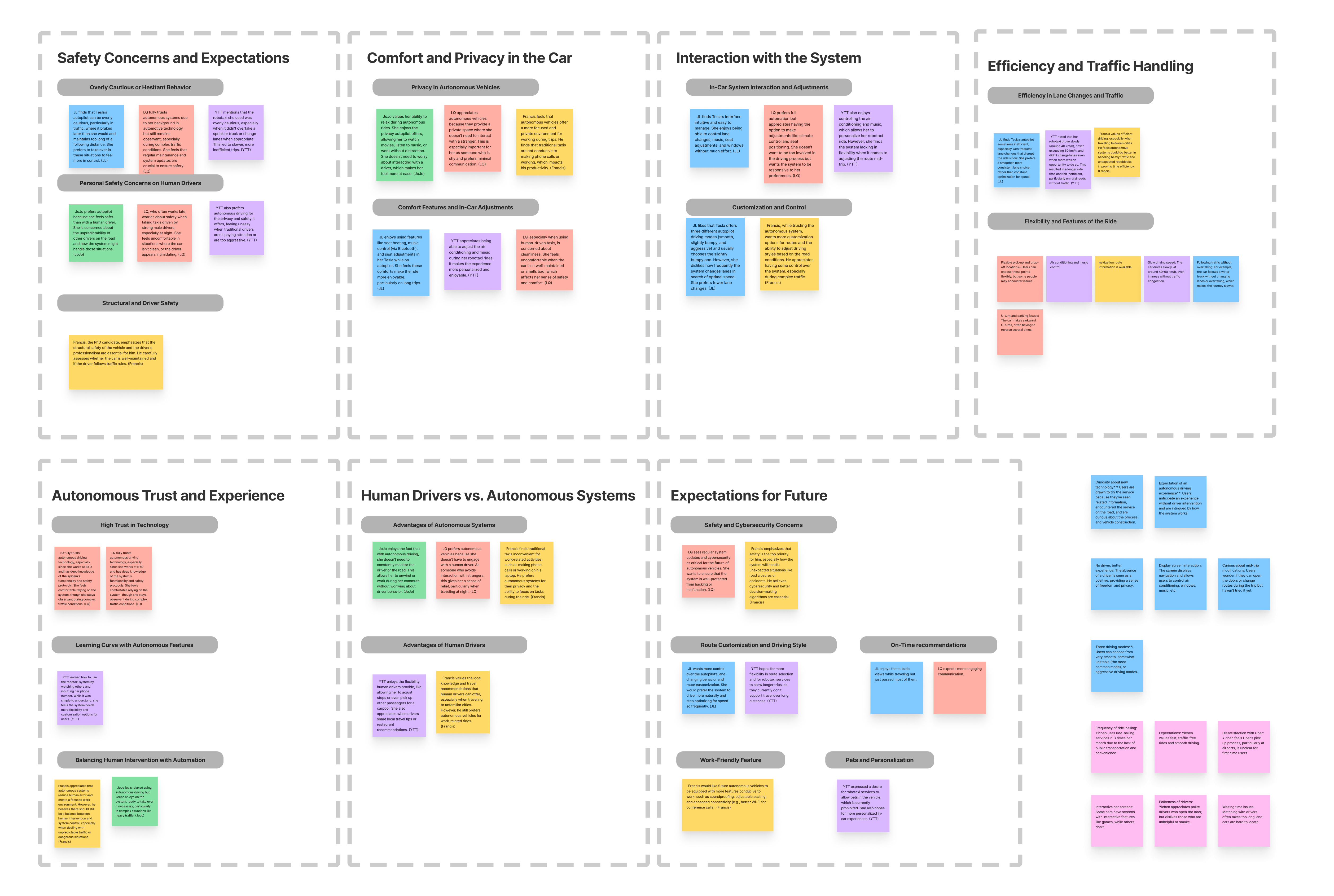
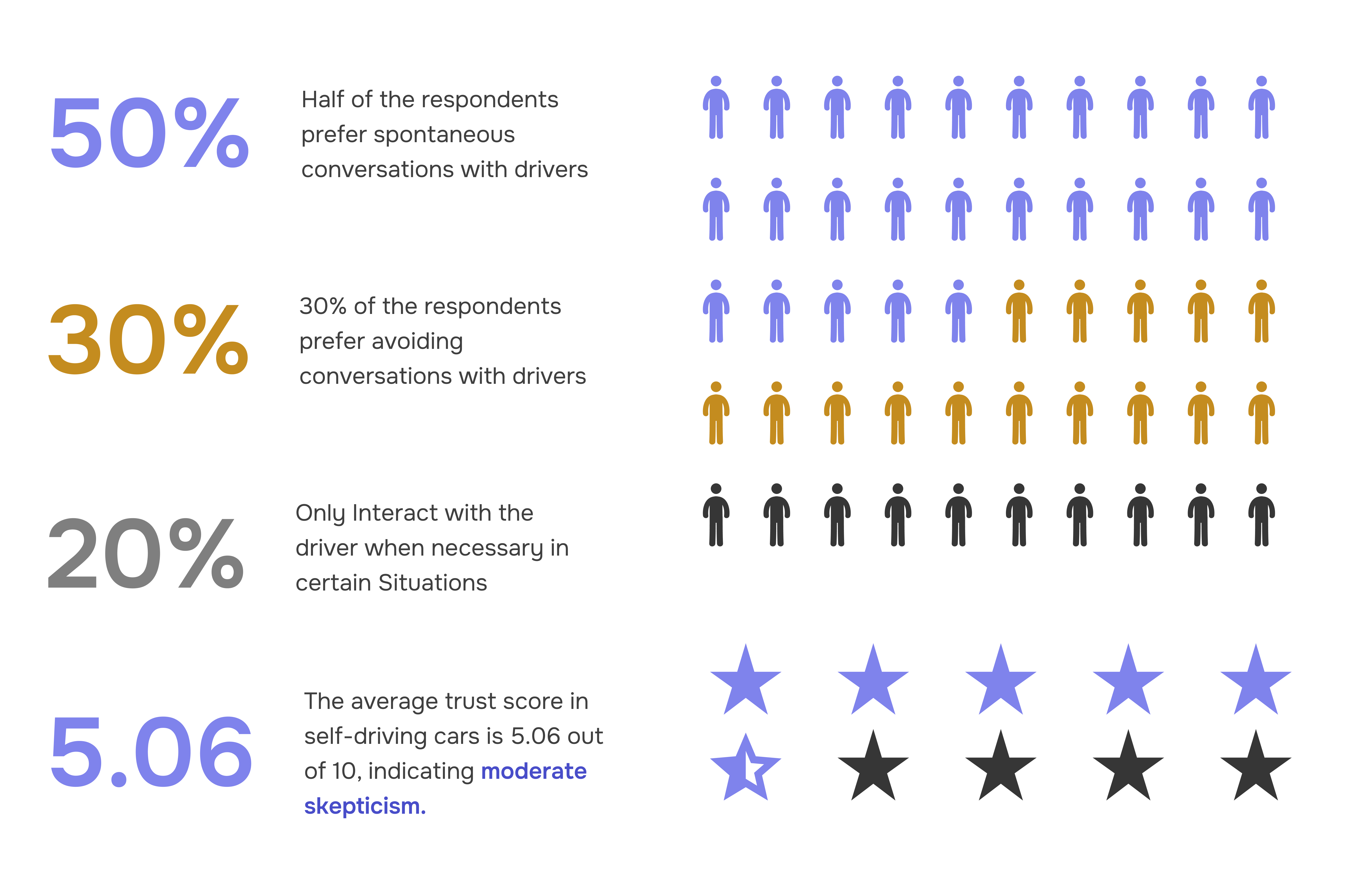
    we conducted qualitative research online and created multiple-choice questions to gather insights from potential users. Using Google Forms, we received over 50+ responses from real users, including students, professionals, and frequent ride-hailers.

    1.1 — Qualitative User Interviews

    We interviewed 10 potential users, a mix of frequent business travelers, casual vacationers, and commuters. This range was chosen to capture diverse perspectives on how they might use ride-hailing and self-driving systems in different contexts.

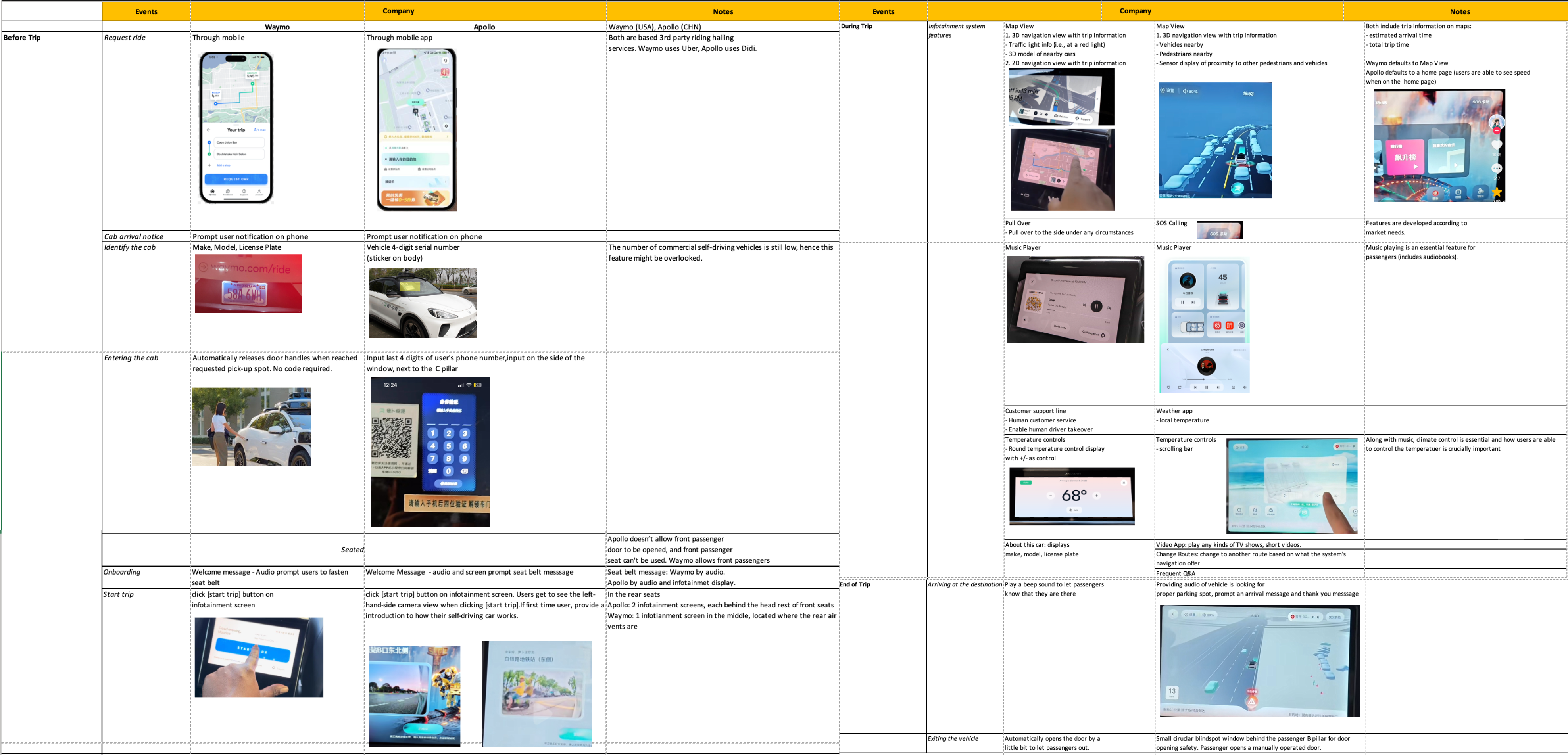
    1.2 Competitive Analysis

    *Feature Understanding

    We want to understand what in-vehicle features these companies are providing to their passengers.

    *Feature Understanding

    POV videos are the primary source, categorized as behavioral recordings. All videos selected for understanding in-vehicle features and passenger experience.

    *Competitive Analysis Chart

    From each video, action steps were logged as annotations. The Excel chart is a combined list of steps that users took with all features that users can choose to use.
    1.3 Define Stakeholders

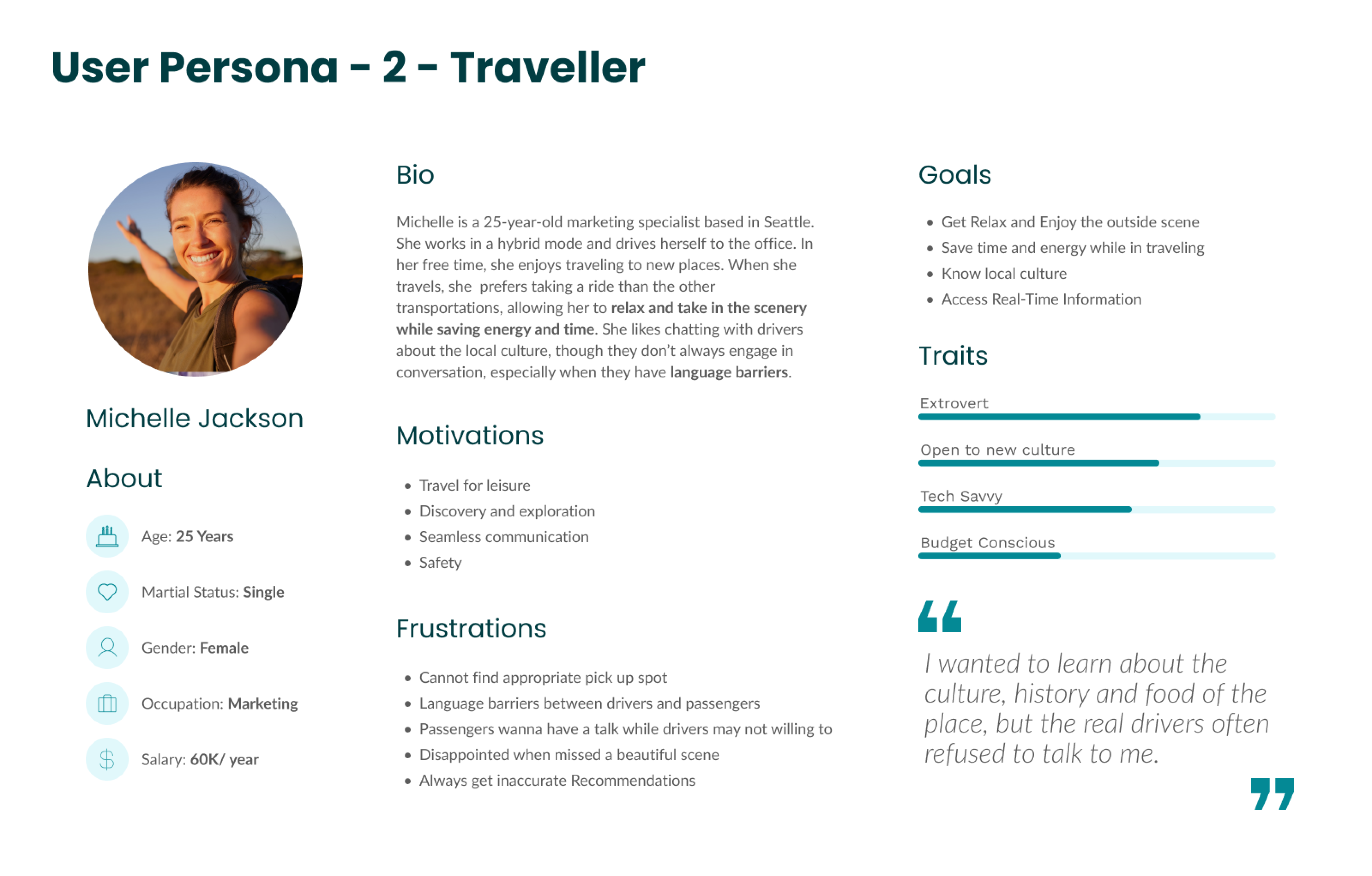
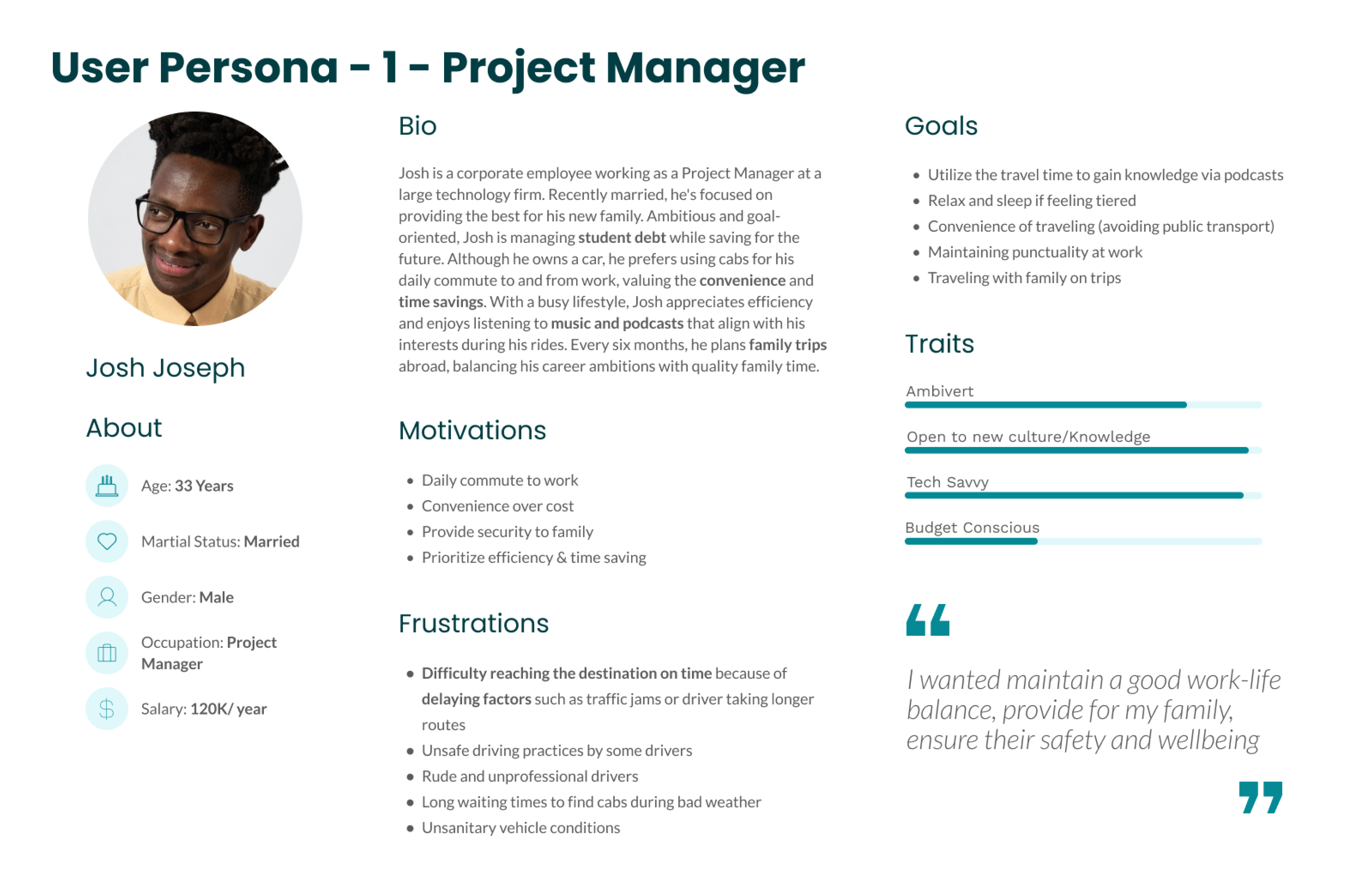
    Based on both the Quantitative and Qualitative research outcomes, we decided to defone two user personas to represent our target audience.

    02 — Design Planning

    2.1 Specification Design Requirements

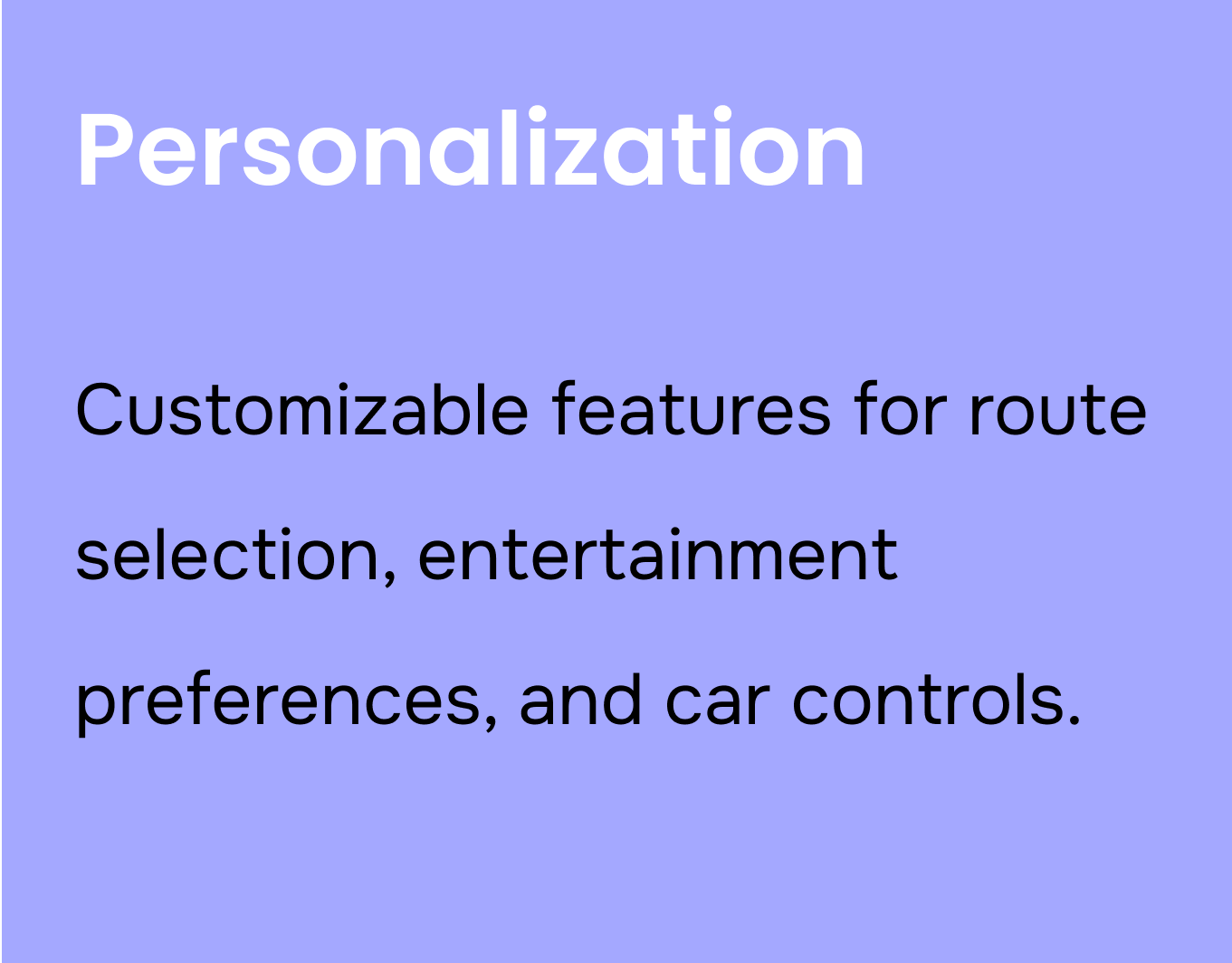
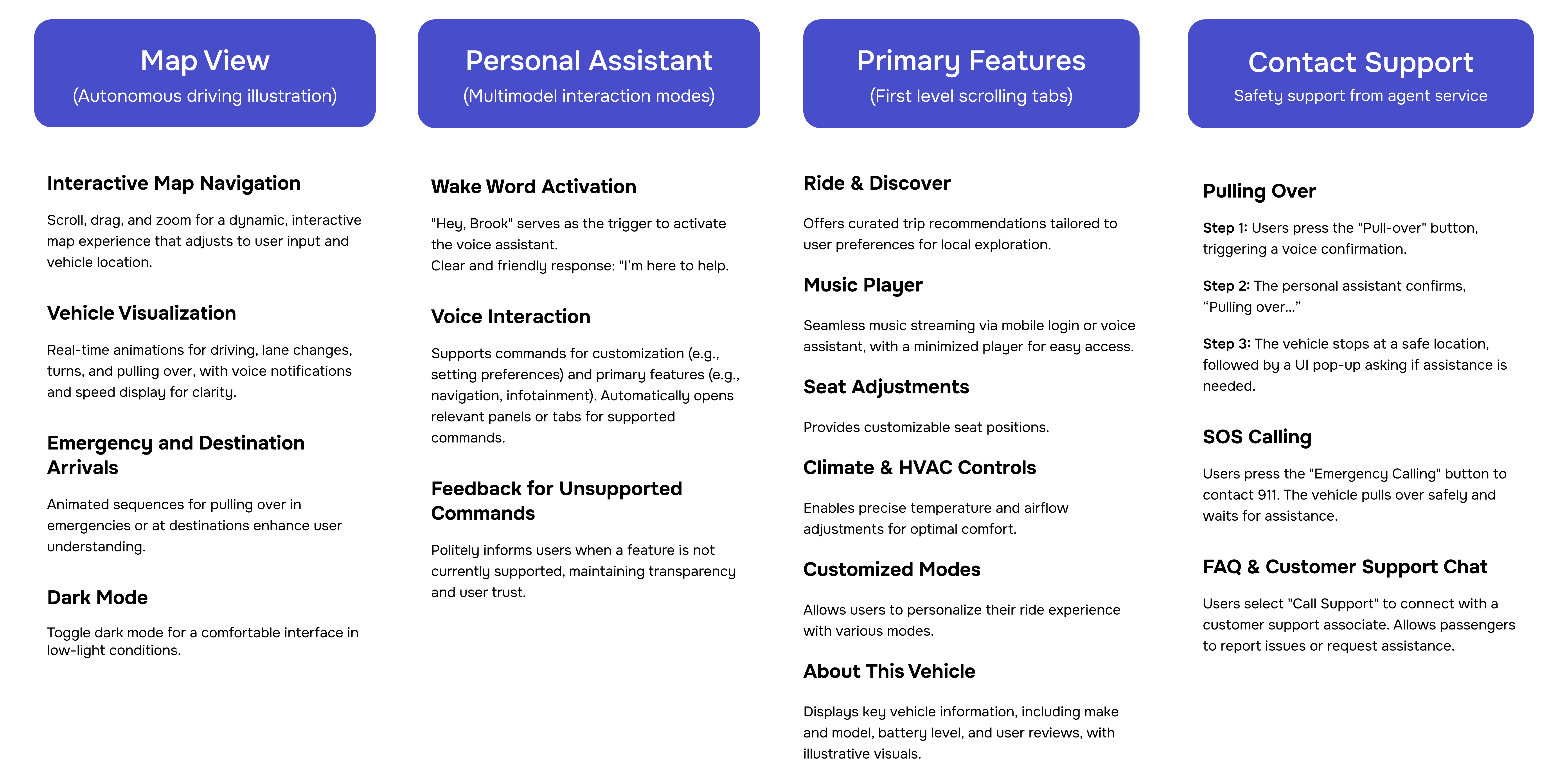
    Our Team prioritized a user-centric, engaging experience with key features like customizable routes, entertainment, and car controls. Transparency is ensured through real-time updates and clear explanations of autonomous decisions. Multimodal interfaces—voice, touch, and visual—enhance accessibility, while integrated feedback systems boost safety and passenger confidence. Local exploration features enrich travel by highlighting nearby attractions and points of interest.

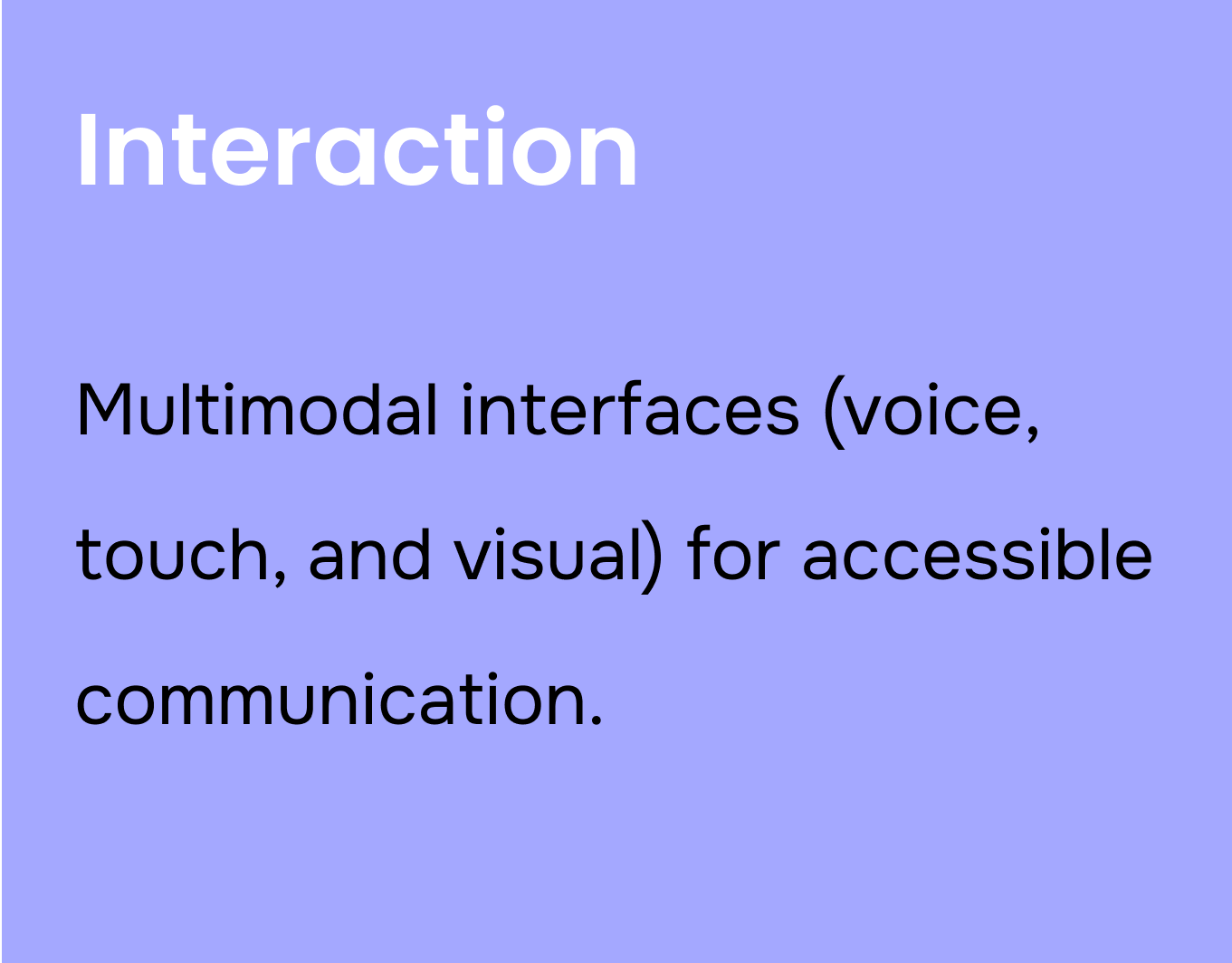
    Interaction
    Multimodal interfaces (voice, touch, and visual) for accessible communication.
    Interaction
    Multimodal interfaces enhance communication by allowing passengers to interact through their preferred modes.

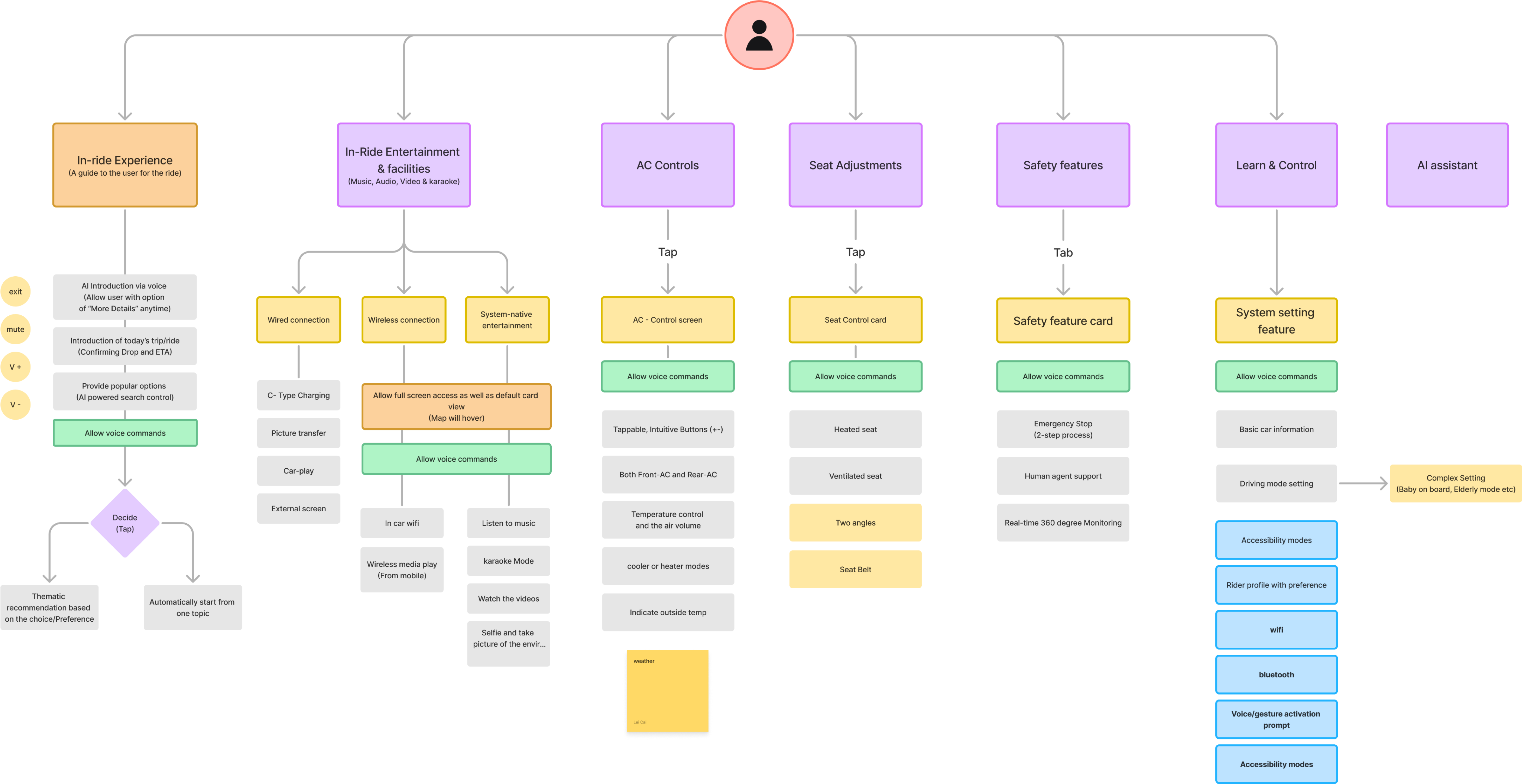
    2.2 Main Feature Planning

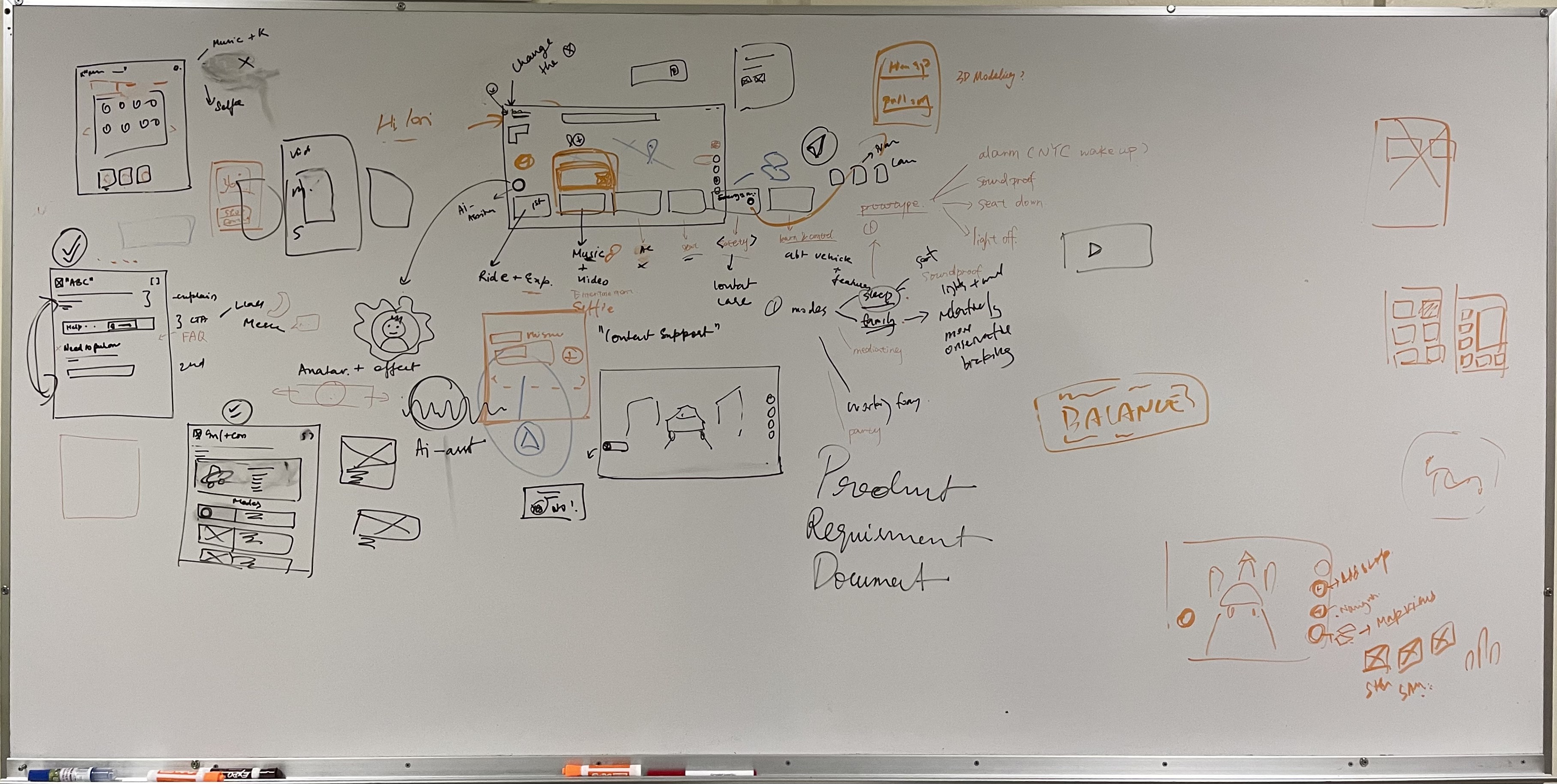
    2.3 Screen Wireframe

    This flow wasn’t meant to be complete or polished. But meet both our product needs and user needs as an MVP.

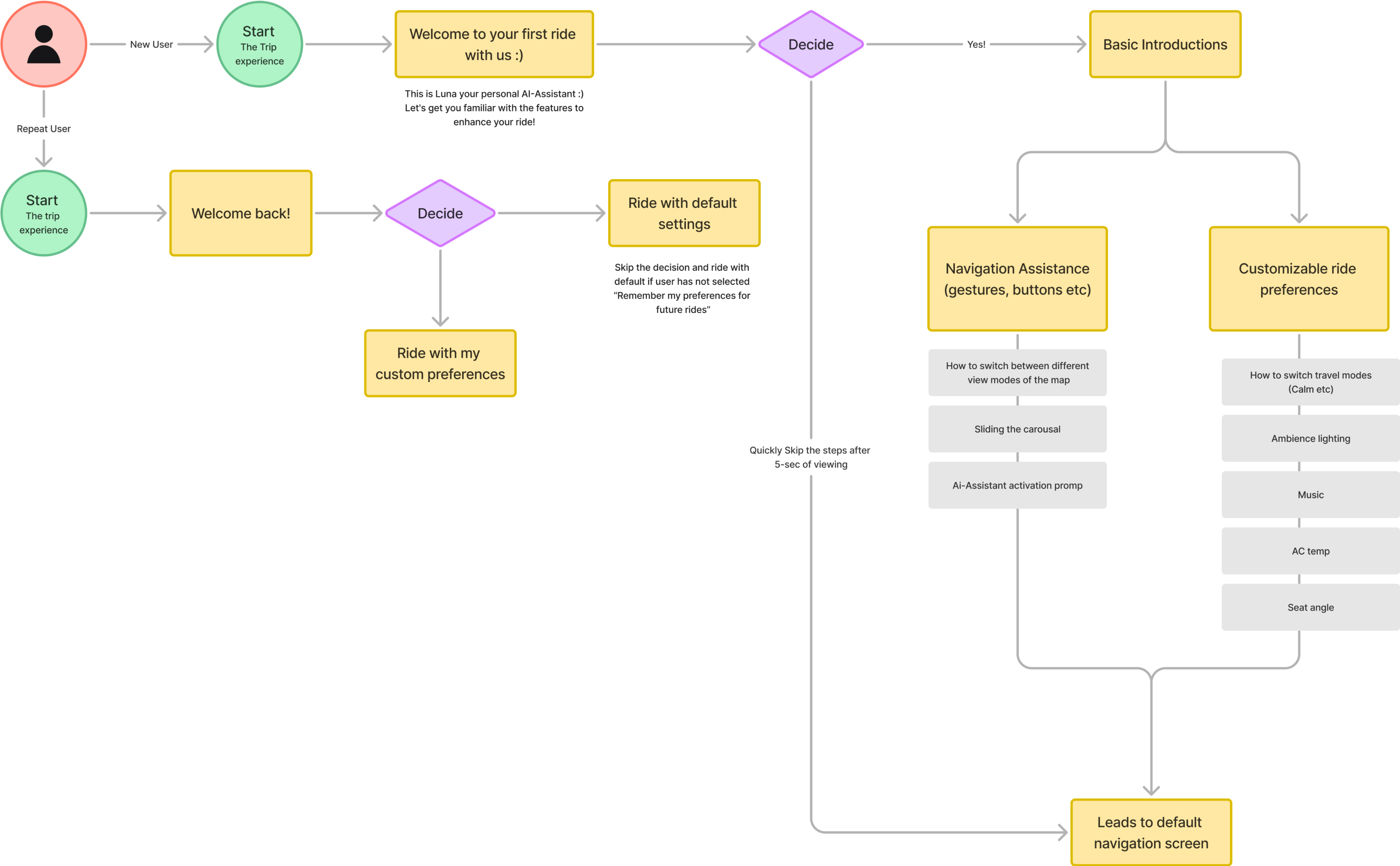
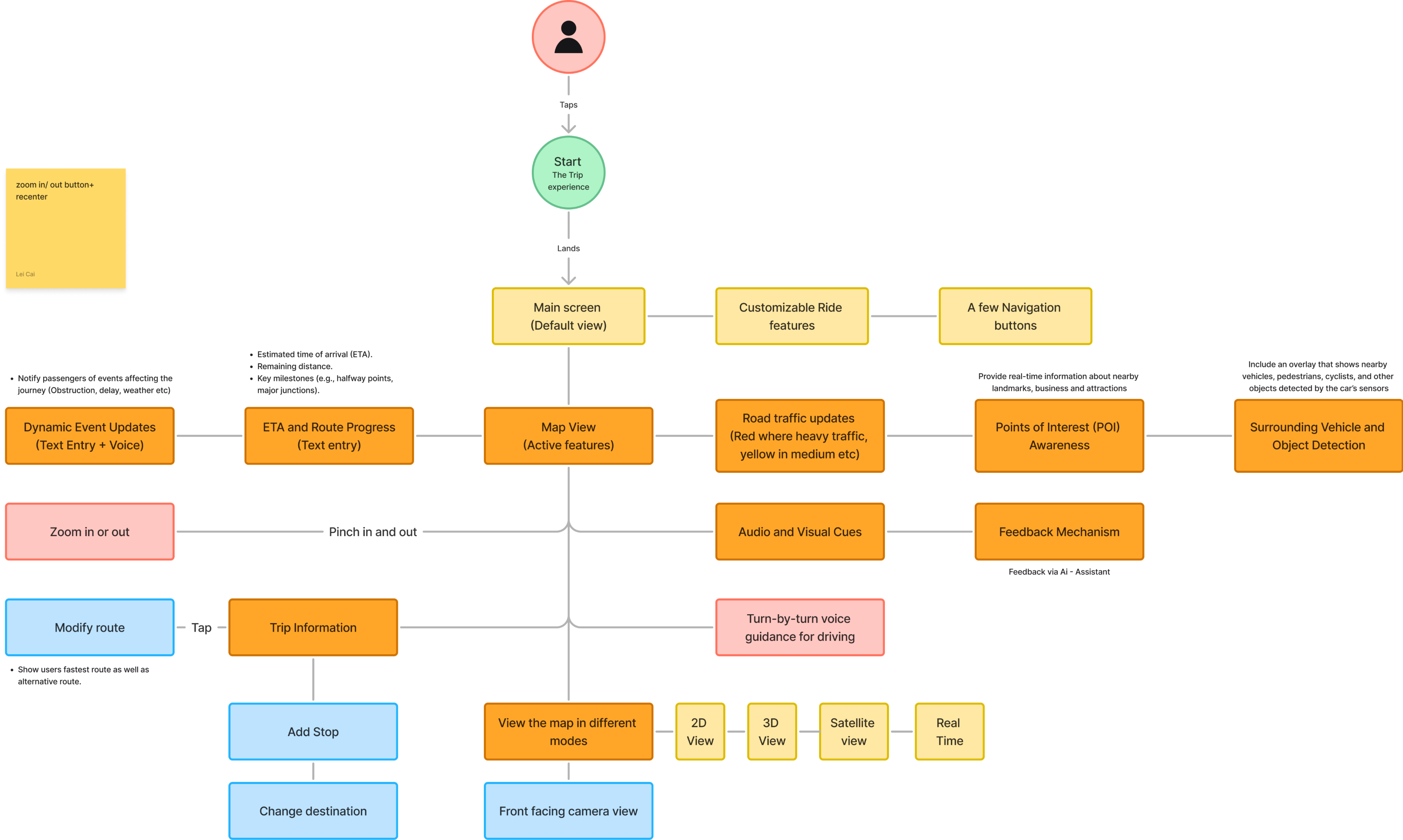
    2.4 Concrete User Flow (3 parts)

    2.4 Concrete User Flow (3 parts)

    03 Design Solutions

    We designed a seamless onboarding process for first-time users, combining a conversational voice assistant with a natural, friendly tone and visually guided instructions. This approach ensures that new passengers are introduced to key features of the in-car system in an intuitive and engaging way, helping them feel comfortable and confident from the start of their journey.

    Design Challenge 1

    HMW design a intuitive UX to provide direct access to ensure passengers can use the system effortlessly without feeling overwhelmed ?

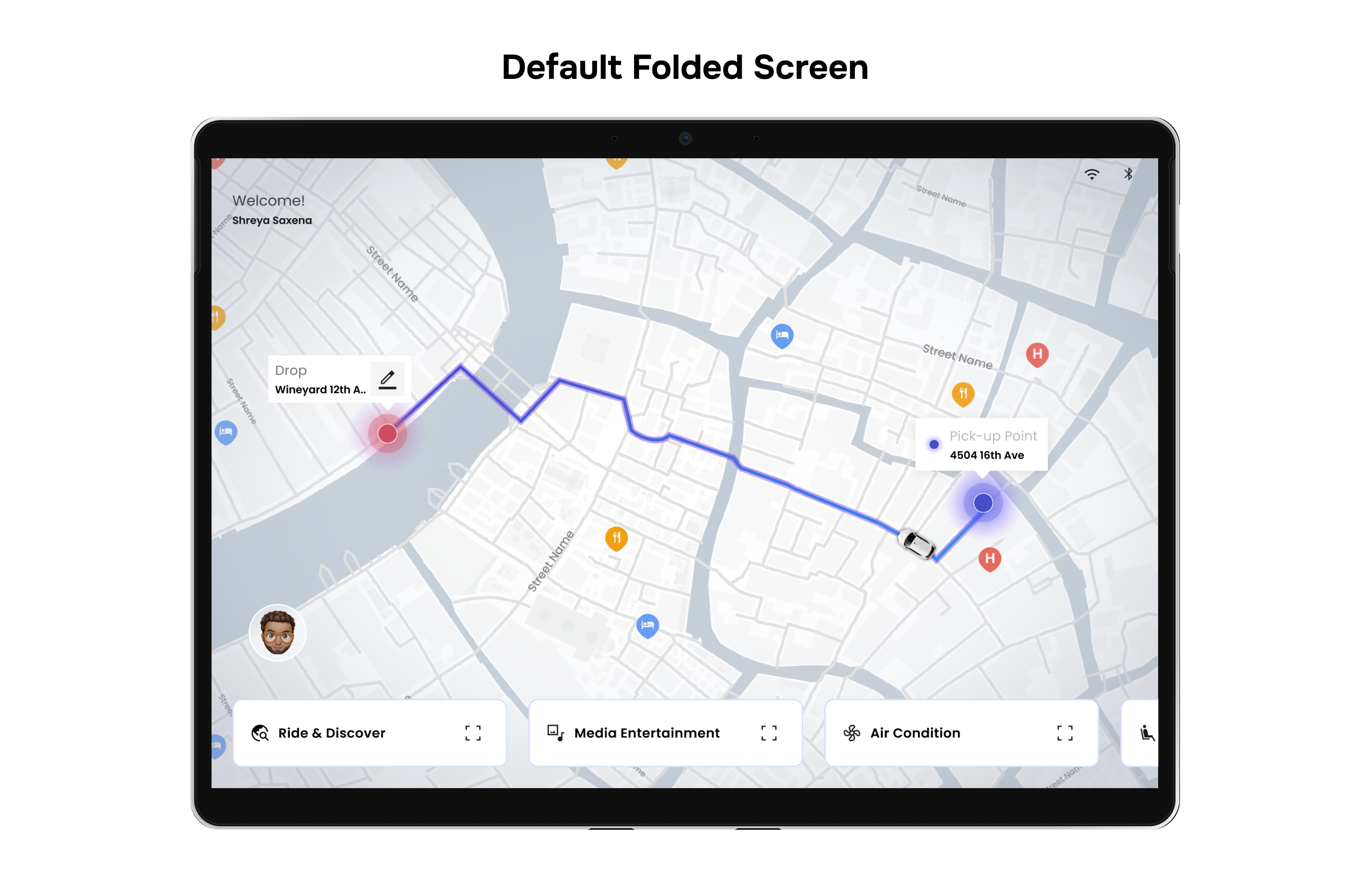
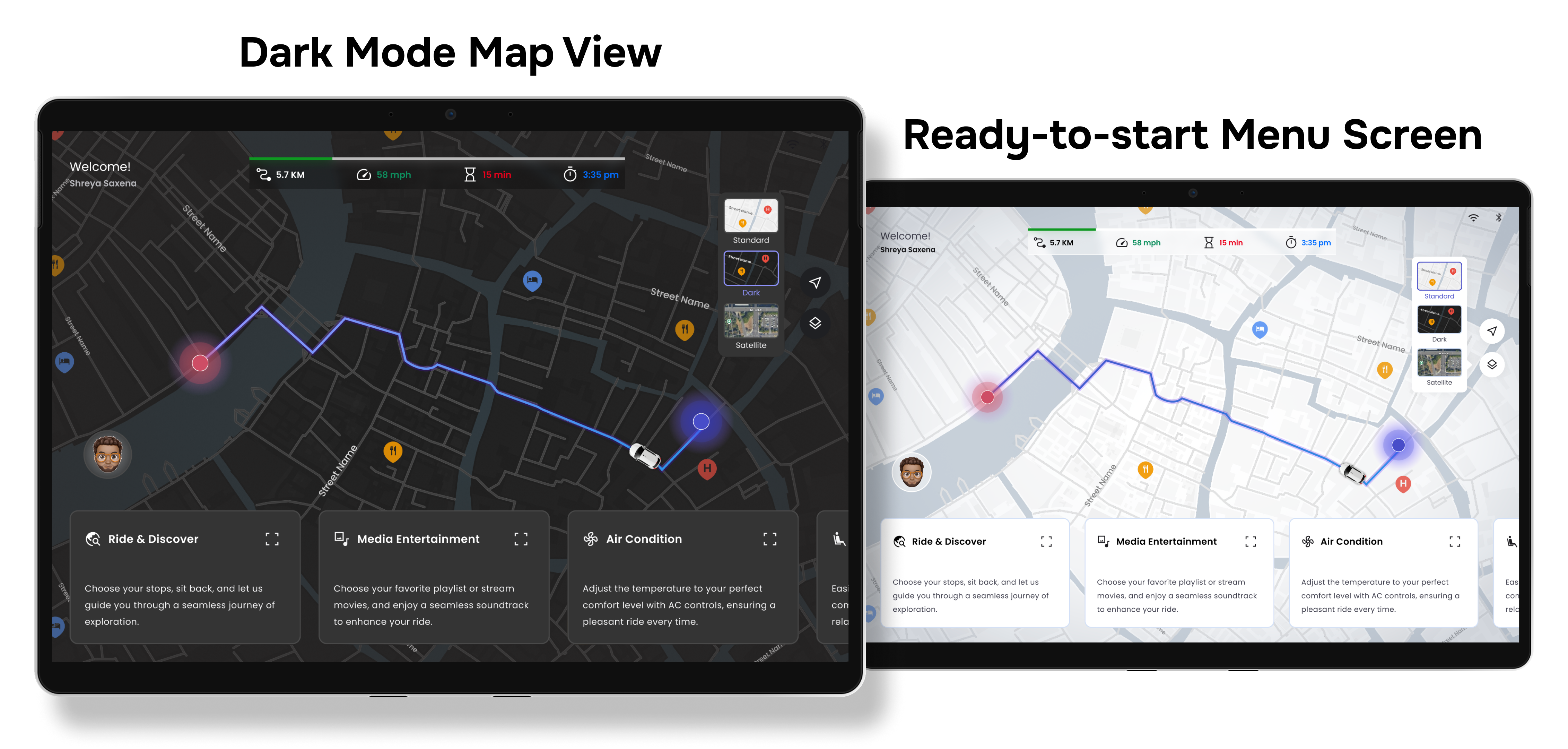
    Solution01 : Simple Layout with Different status

    Solution02 : Scrollable Function Cards

    xxxxxxxxxxx

    Design Challenge 2

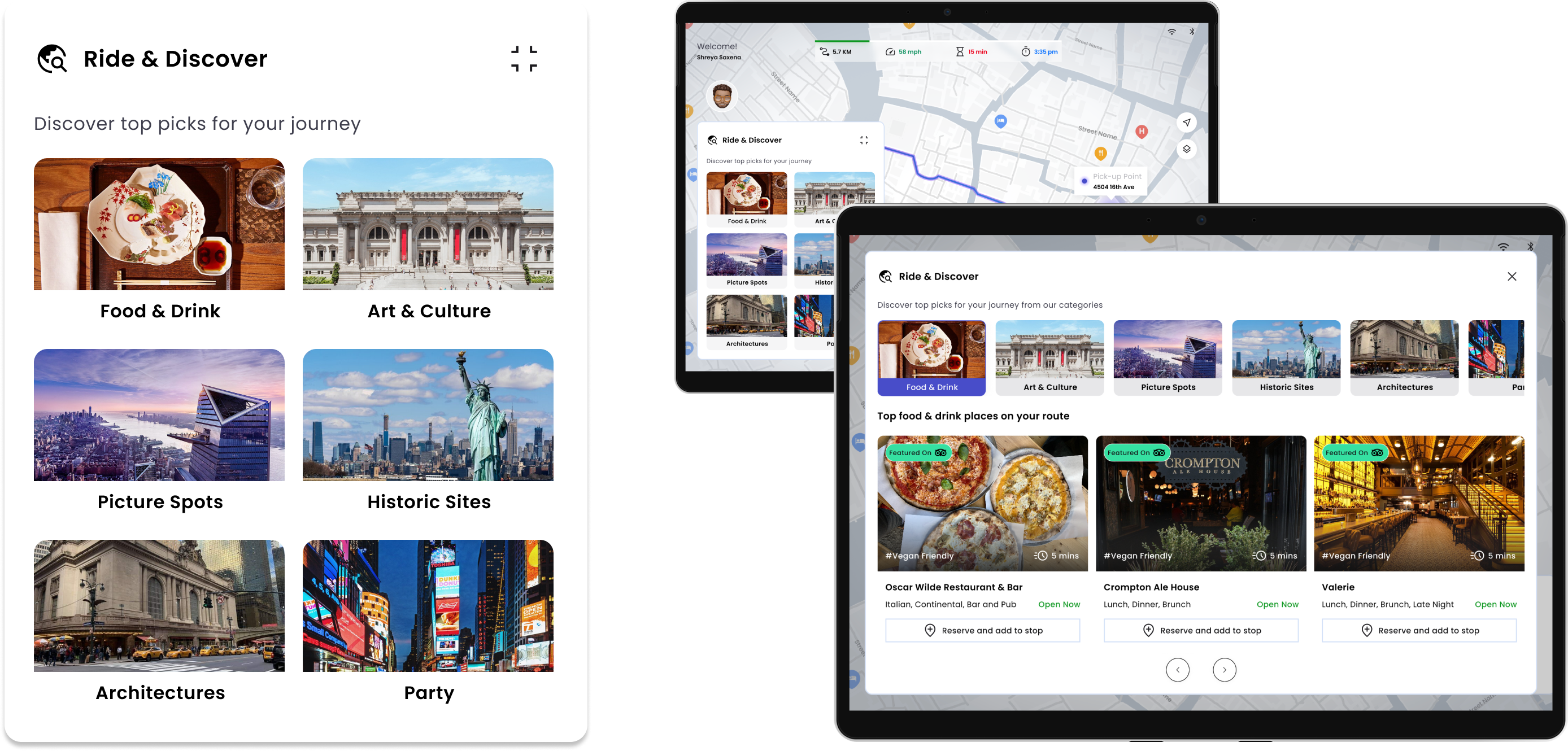
    HMW create personalized and localized travel experiences that cater to diverse passenger needs while enabling passengers to feel a sense of control over their journey?

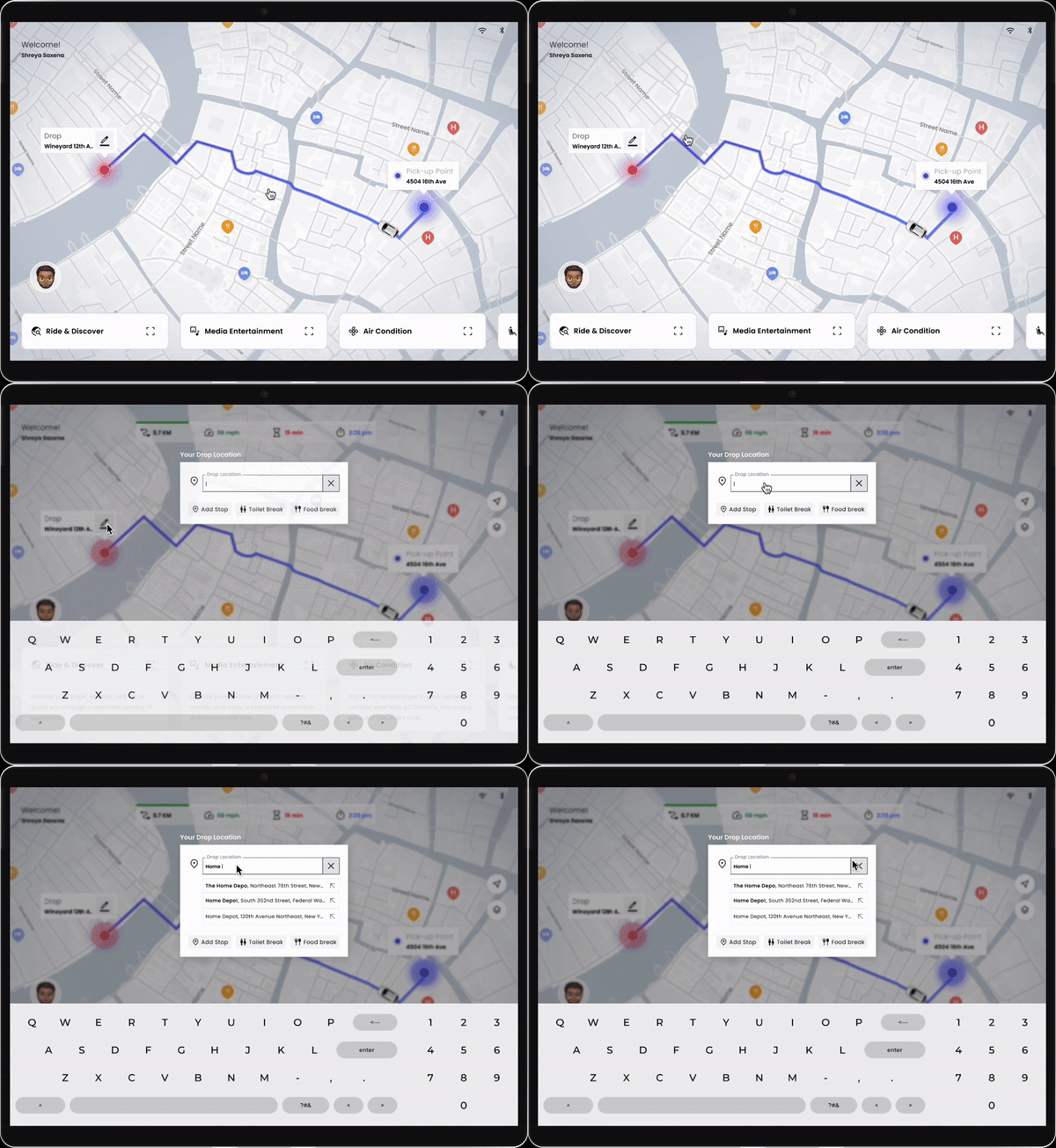
    Solution01 : Route-based Recommendations with Seamless Route Edit

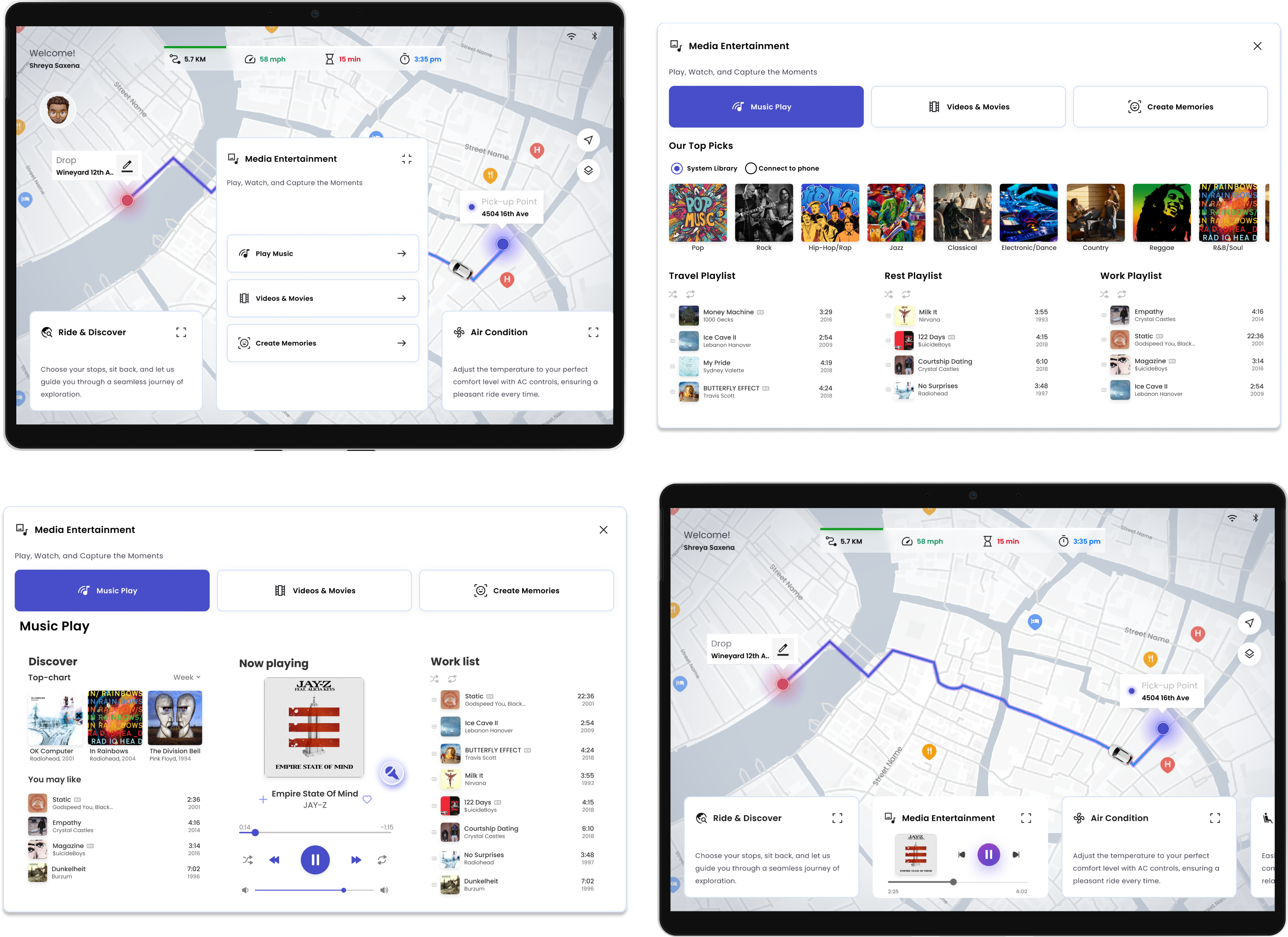
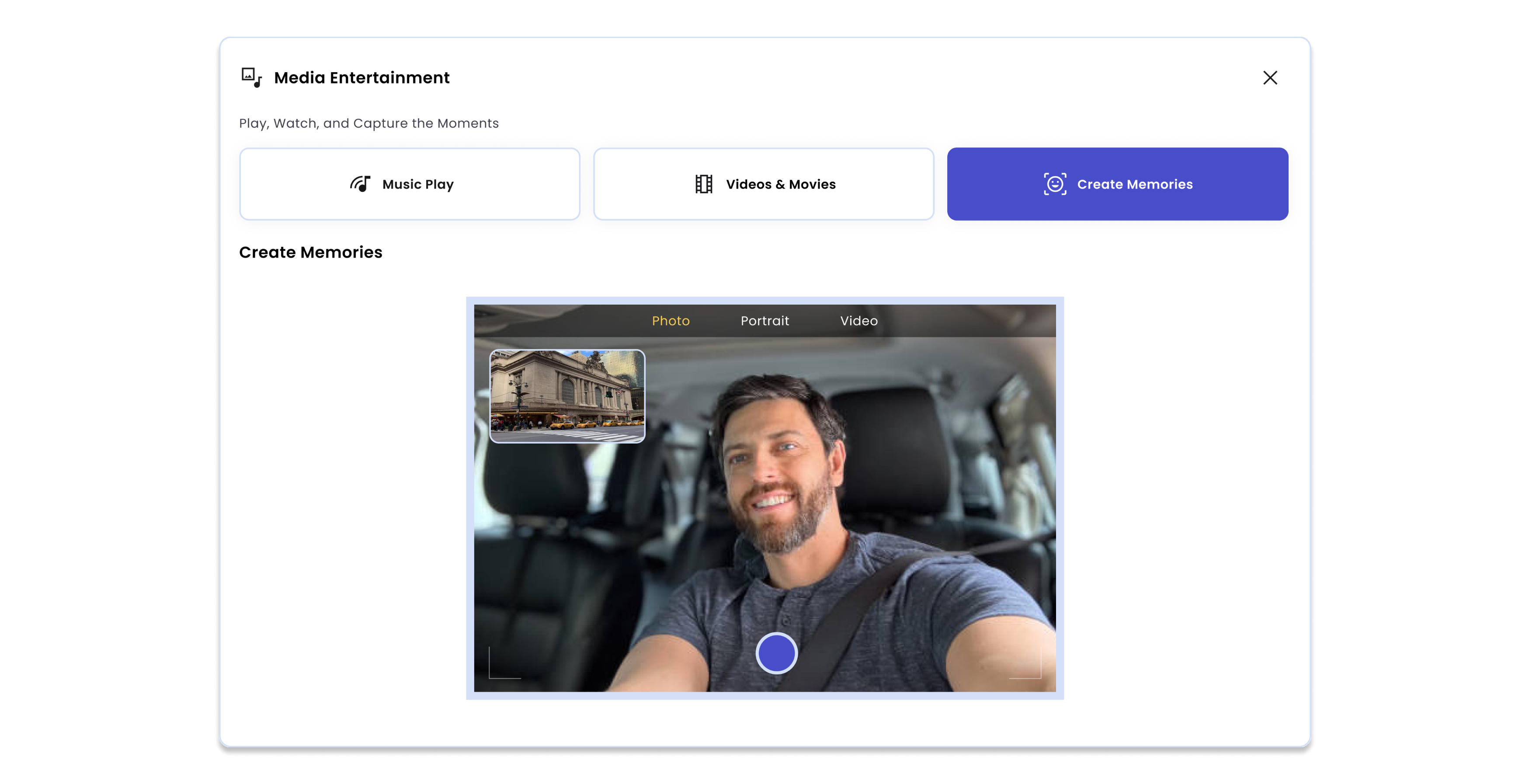
    Solution02 : AI-powered In-car Entertainment

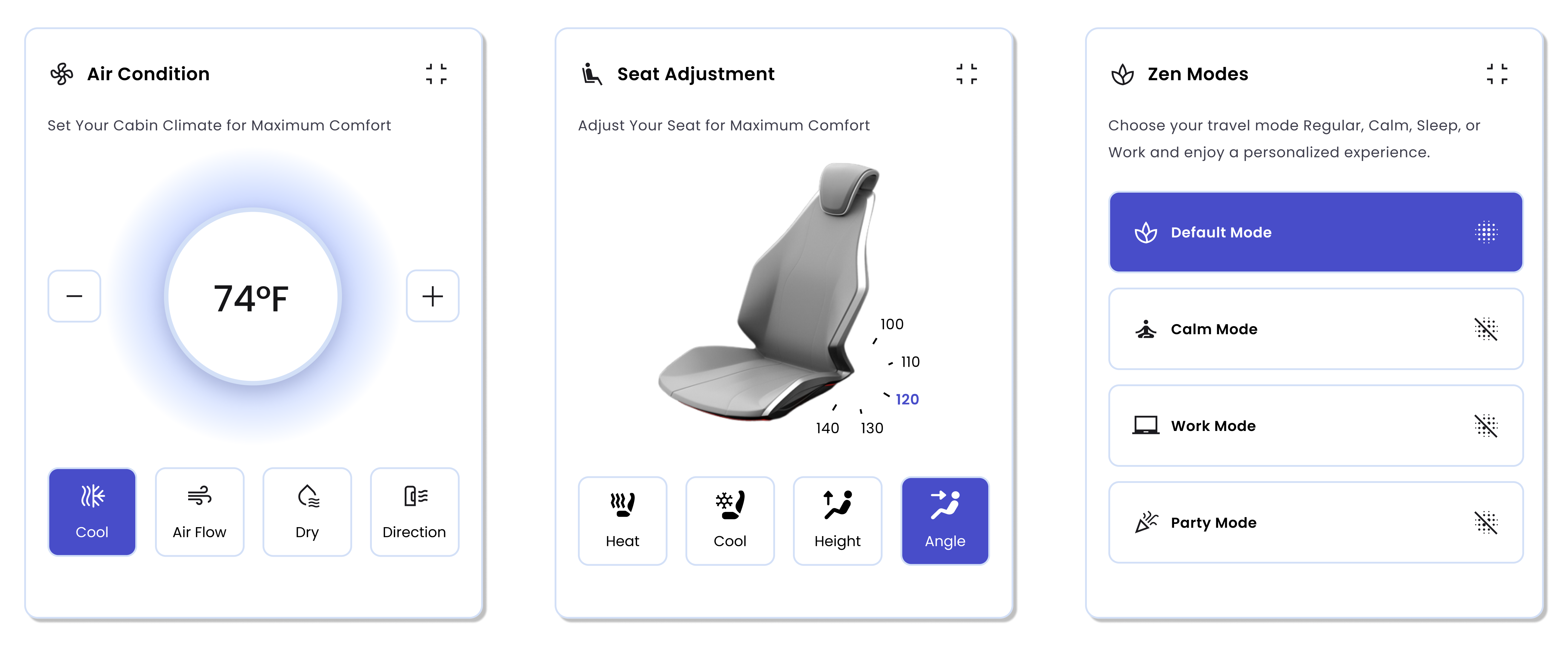
    Solution03 : Smart Infotainment Control

    Air Control

    Seat Adjustment

    Travel Modes

    Design Challenge 3

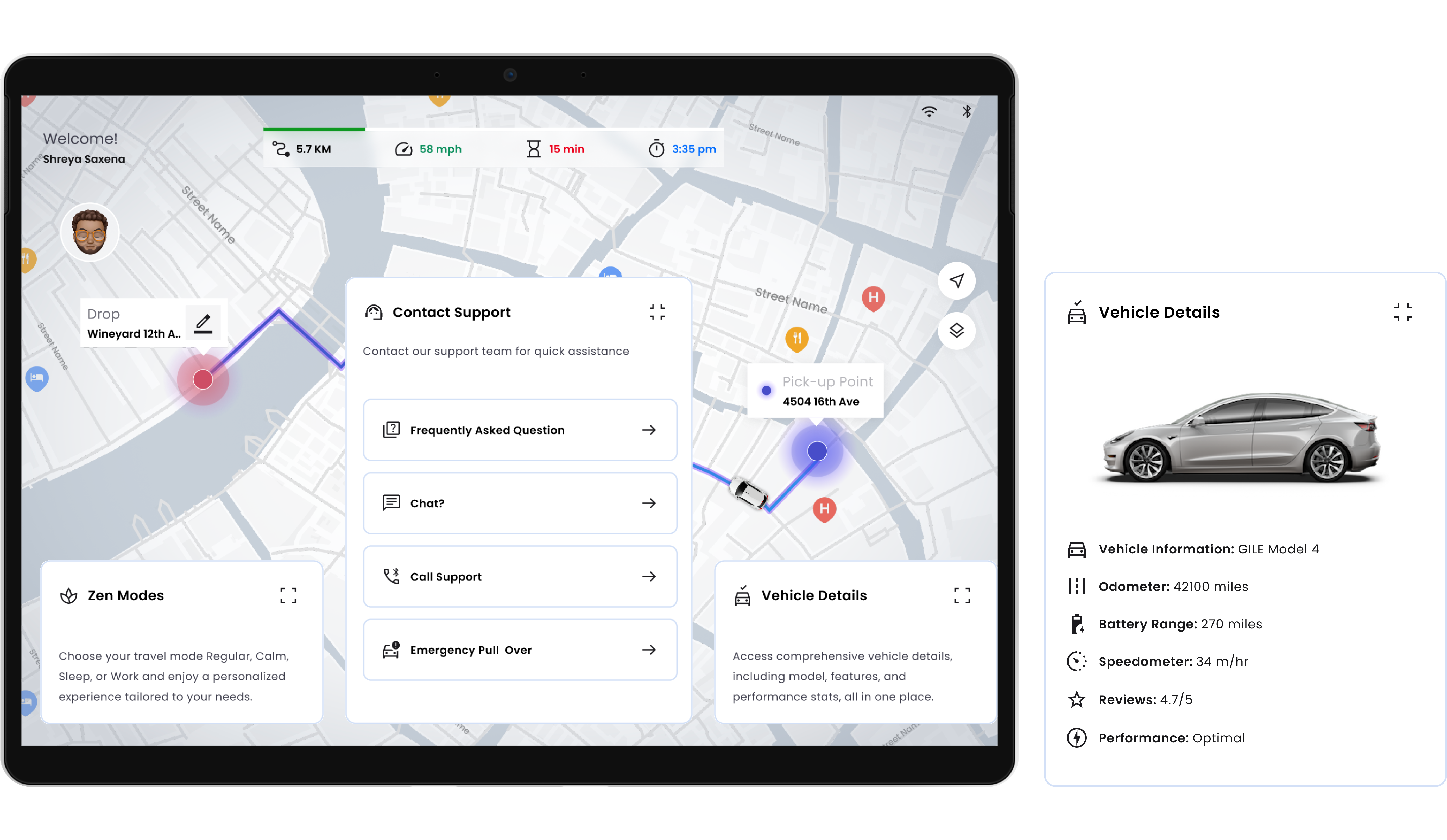
    HMW improve passengers' sense of safety while ensuring these features are accessible, reliable, and unobtrusive during routine trips?

    Solution01 : Increase Awareness of Autonomous Decision

    Solution02 : Real-time Notification for Safety

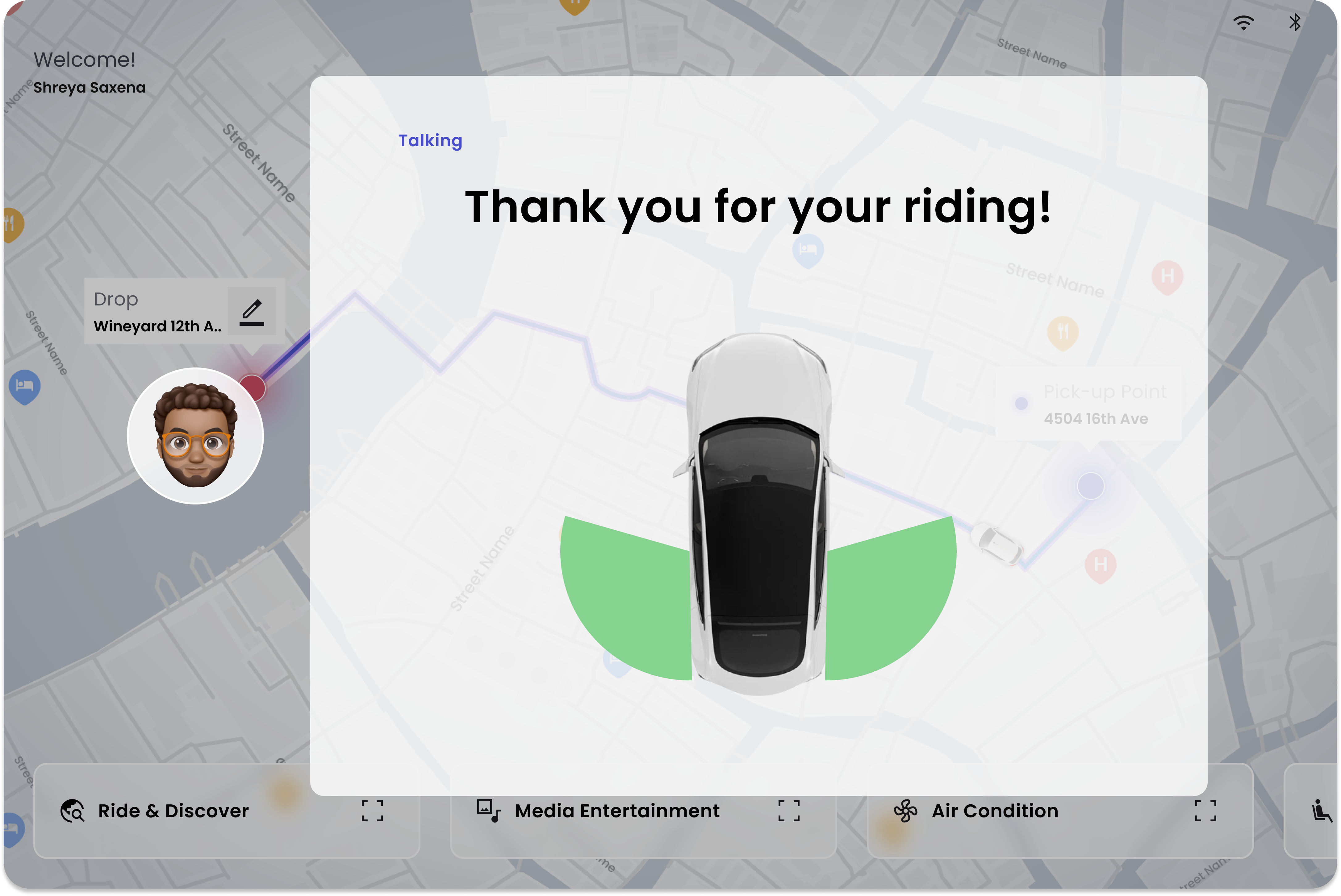
    Solution03 : 7*24 Multi-format Agent Support + Car Information

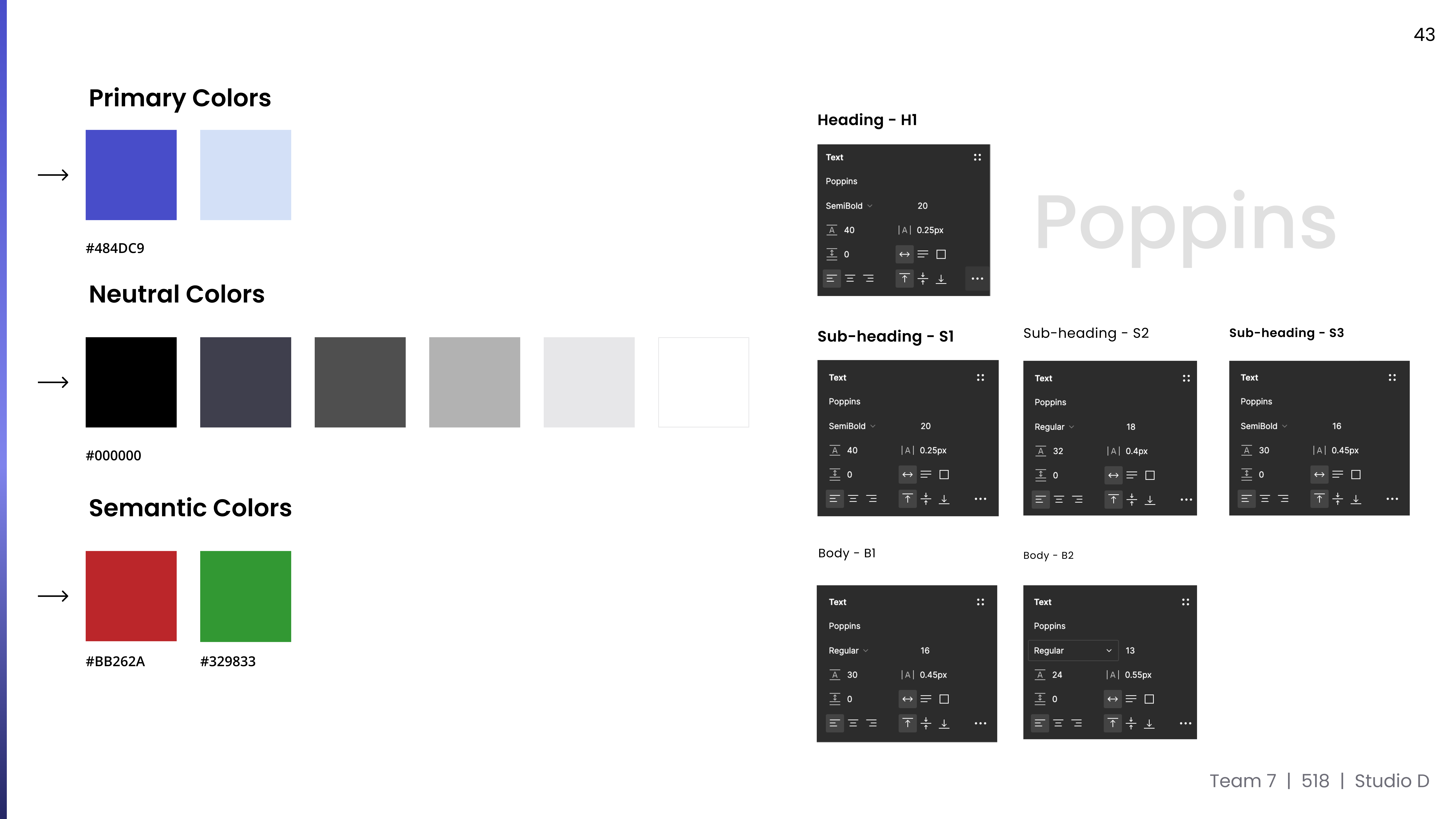
    03 Design System

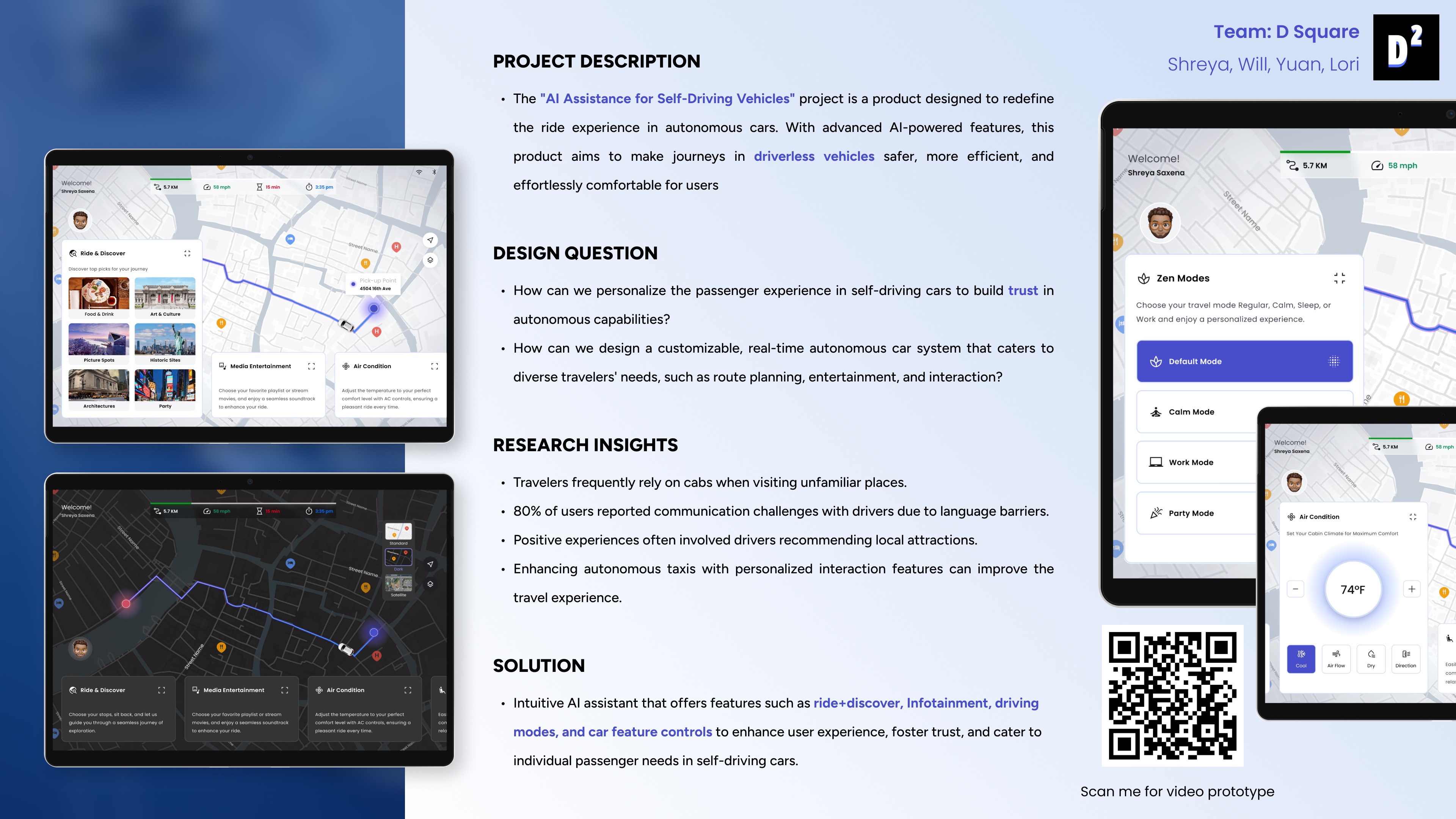
    04 Information Poster

    05 Post Project Reflection

    Next Steps

    • Companion Mobile App Design: Design the mobile product to fullfill the product circle.
    • Accessibility and Inclusivity Improvements: Further develop features ensuring compliance with accessibility standards, making the system usable for passengers with diverse abilities.
    • Integration of Advanced Technologies: Explore implementing NFC, QR codes, and voice recognition systems for secure and efficient passenger interactions.Incorporate adaptive infotainment options that personalize in-ride experiences based on user preferences.
    • Testing and Validation: Conduct usability testing across diverse user groups to validate the effectiveness of features, particularly in safety and accessibility.Test real-time tracking and communication systems under varying conditions to ensure reliability.

    Takeaways

    • Designing an intuitive and accessible(User-Centric) system is critical to building user trust and adoption, particularly in autonomous technologies.
    • Real-time communication and tracking systems foster a smoother passenger experience while enhancing trust and safety.